
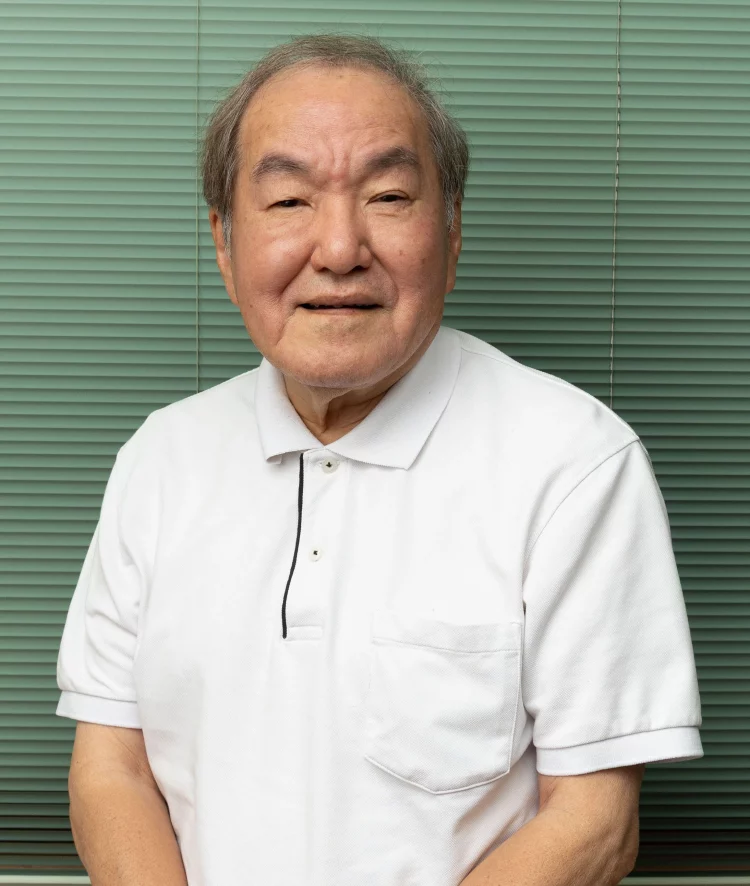
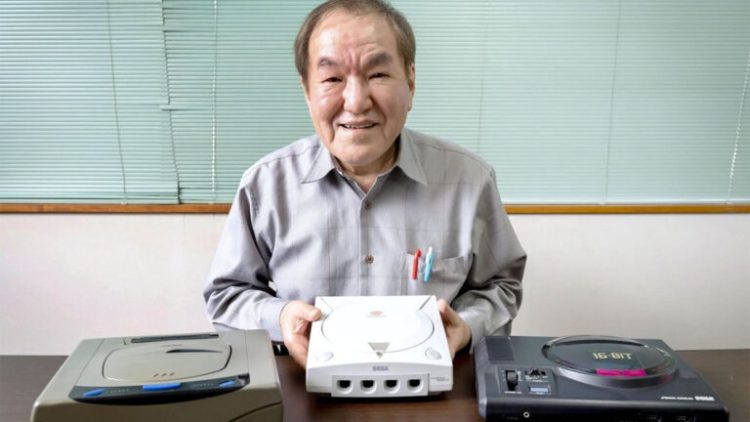
The video game industry is only coming about to being 60 years young, which means the pioneers of this industry are slowly but surely no longer going to be with us. The passing of Hideki Sato on February 13th at the age of 77 was announced via the online fanzine Beep21, a successor to Japan’s official Sega Mega Drive magazine. This sad news, following the death of David Rosen on Christmas Day, elicited numerous tributes from across the industry, including official social media accounts for Sega of Japan and its Western branches, and figures like composer Yuzo Koshiro. Fortunately, Sato gave several interviews in his later years, providing a opportunity to reflect on his life and career.
Early Life and Path to Sega
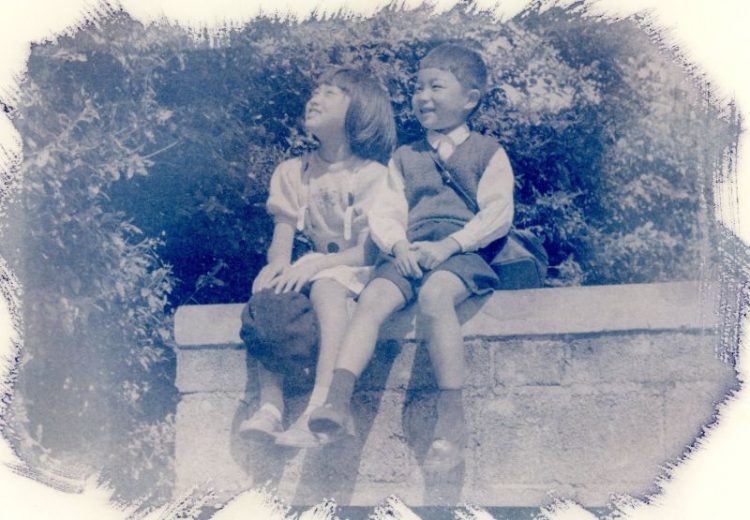
Hideki Sato grew up during Japan’s post-war boom in a coal mining town with two siblings. His father frequently changed jobs at seesaw sharpening companies, necessitating many difficult family moves. The family was generally poor; simple items like sweets were luxuries, and common meals consisted of whale meat and miso soup. Refrigerators were rare, and poor general hygiene was common, with maggots often present on food. Sato, like many boys, was mischievous, once shoplifting a Tiger Tank model worth 2,500 yen, a quarter of his father’s 10,000 yen bonus. Childhood activities during this period also included bug catching with nets made of spider webs and playing with balls and marbles, known as pachi (related to pachinko/pachislot).
Motivated to enter a good high school, Sato began reading classic Japanese and international literature. By his own account, he was an average student, not joining the most prestigious high schools and universities. He eventually pursued engineering, focusing on mathematics and science. The junior college he attended in Tokyo was a grueling environment, striving to become a full four-year university, which often drained Sato’s motivation.
As graduation neared, employment wasn’t Sato’s primary focus. Inspired by a neighbor, he considered joining the Japan Overseas Cooperation Volunteers (JOCV) to gain a driver’s license in America, which could be easily converted in Japan. However, he failed the agricultural exchange program interview by giving disagreeable answers to questions about English names for vegetables or how he’d handle conflict with a host father. Forced to find a job, the traditional paths to companies like Trio, Fujitsu, or Casio, or even a recommended switch-making company, held no appeal. The application period for the appealing plastic model company Tomy had already closed. It was then that he discovered Sega.
Joining Sega
Sega intrigued Sato with its combination of slots and jukeboxes, a relatively good starting salary of 32,000 yen, and the benefit of having weekends off, as it was a US-owned company. His hiring was a stroke of pure luck: the HR manager, an alumnus of Sato’s university, was bored and had only found two suitable R&D candidates for three openings, even though the application period was over. Sato cheekily requested a tour and expressed keen interest in R&D, but not the factory floor. The HR manager sent him to the R&D manager, who warned that the job involved manual labor like cutting wood and metal. Sato accepted, citing his love for making plastic models. He was hired on the spot, a process that seems wondrous today, as Sato admitted he would have stood no chance a decade later when Sega screened 10,000 applicants.
In the early days, Sega’s focus was less on in-house product development. On April 1st, 150 new graduates were welcomed, but only eight were slated for direct product development; the rest were sales staff or arcade managers. Sato commuted two hours from his parents’ home for the first six months before renting a room with a coworker. However, Sato was a self-described slacker, often tempted to skip work mid-commute, and his habit of “chasing girls” around Tokyo clashed with his roommate’s “orderly” lifestyle.
Sato’s first work involved the promised manual labor: sharpening drills, cutting iron plates, and bending metal. This system involved a “researcher” or “designer” creating a draft with a supervisor overseeing the team. Though the supervisor criticized Sato for not following the draft exactly, the designer confirmed that only the critical components mattered. Sato found that this “cutting corners” approach was viewed as efficient. He also spent months on a massive diorama project, a 330 square meter area where people could drive model cars and trains. This project ultimately failed when connection issues stopped the vehicles. Sato recalled this period as being more like working in a mechanical shop than a game development company. Workshop staff and researchers were strictly segregated and Sato was assigned to the electrical aspects of pinball machines. Sega was enhancing imported American pinball machines with magnets, railings, and faster balls to make them more three-dimensional.
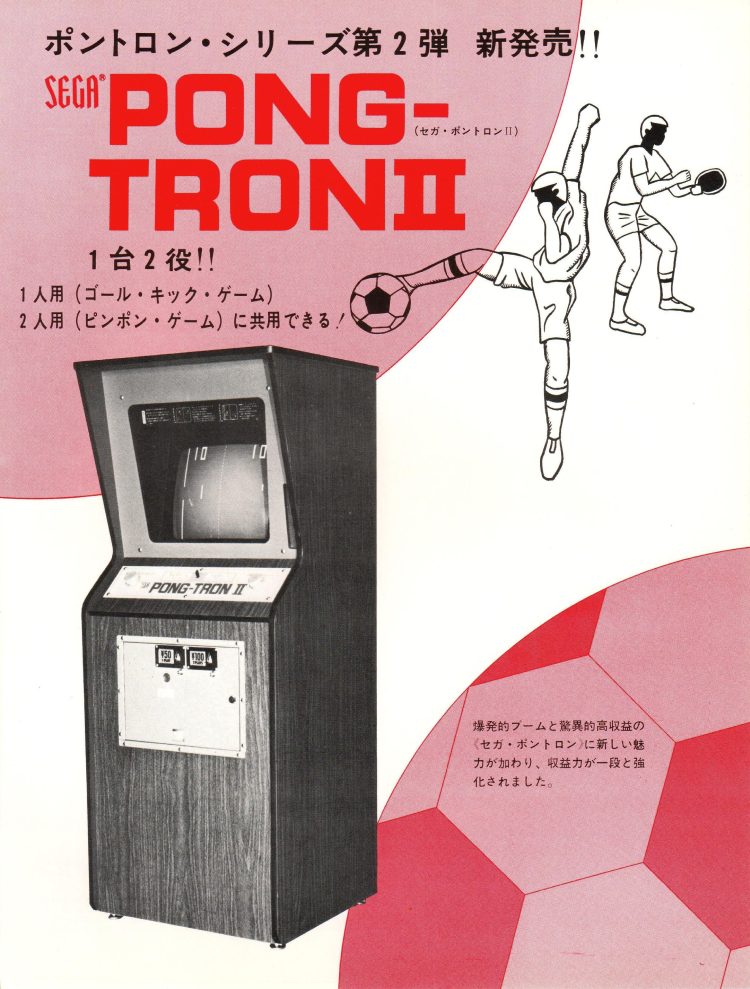
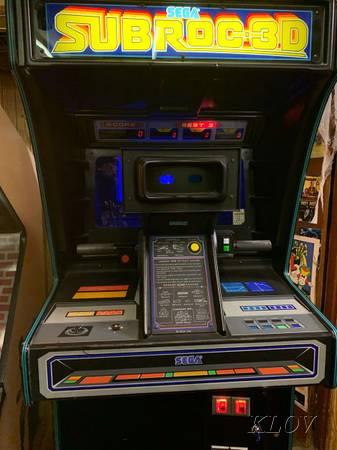
The arrival of Atari’s Pong “shocked” Sato, who couldn’t comprehend how TVs could display anything but still images. Reverse-engineering Pong led to experimentation, discovering grayscale by manipulating black levels, color via RGB signals, and early 3D through a partnership with Panasonic for the SubRoc 3D cockpit cabinet. Initially, Sato felt confident in Sega’s capabilities, thinking they didn’t need Panasonic, but later realized collaborating with larger names boosted advertising. The rise of TV production in Japan, fueled by hits like Space Invaders, was crucial. Sato admitted that Sega’s Pong Tron was a complete copy. Atari was generous, supplying circuit diagrams. Sega became famous for its “crazy” culture of innovation, such as using TV displays vertically or adding many volume knobs. The machines had a “throwaway” culture: costs were recouped in three months, after which they were profitable, then often scrapped in China for parts. This wastefulness was common before microcomputers became standard.
When Sega acquired the American company Gremlin, which was far more advanced in software, Sato was one of seven employees, from product development, production, and sales, sent to Los Angeles for two months of intense learning in the late 70s. This learning experience of sending the Japanese to America, became a common practice at Sega. Sato inherited Gremlin’s efficient method of using libraries and APIs, which he used to develop Sega’s first standardized arcade board, the Sega System 1, 2, and so on.
The Console Era
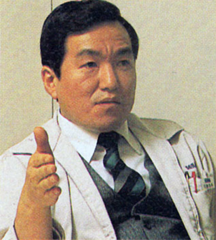
Sega management felt the company was lagging by only focusing on arcades. Nintendo’s Game & Watch sold over 5 million units, shocking Sato. Sega chose to enter the consumer market with a user-friendly PC, taking a different path than Nintendo. Sato was again placed in a small team to develop what would become the SC-3000 (Sega Computer, selling for 30,000 yen), working with the external electronics company Foster Electric. The arcade side of the business remained the guaranteed mainstream; a single World Derby machine guaranteed 15 million yen in high-profit sales. In contrast, you needed to sell a hypothetical 10,000 SC-3000 units for 200 million yen in revenue. Sato led the development. His supervisor, Tokuzo Komai, poached from Nintendo’s arcade development, tipped Sega off about the upcoming Famicom. In a rushed response, the SC-3000 was quickly converted into the SG-1000 home console, by simply removing the keyboard.
The console experiment was a success, thanks largely to the buzz Nintendo created, as Sato admitted. Sales of 160,000 units “blew everyone at Sega away,” leading to what Sato called “console fever.” The SG-1000 was essentially a repackaged ColecoVision with a Z80 chip. The following year, the SG-1000 II featured a redesigned shell and molds, as Sato felt that the previous model looked like a “tombstone.” with the cartridge at the top He advocated for the sleek, card-based cartridges, however memory limitations became a problem. The Mark III, based on the System 2 arcade hardware, involved Yamaha, whose sound chips would be used through the Saturn era.
Though not an executive, Sato was a close observer of the corporate environment, interacting with figures like CSK‘s Isao Okawa (who became Sega Chairman after CSK acquired shares) and later president Hayao Nakayama. Okawa strongly believed in consumer software, the global market, and the eventual decline of arcades, which cemented Sega’s commitment to the console business. This vision also led to the failed Sega AI computer, but later to the successful Sega Pico, continuing the SC-3000’s computer ambitions.
Despite strictly being an engineer, Nakayama would ask Sato’s opinion on major corporate decisions, such as a potential merger with Sony in the 80s. Sato believed this was impossible due to Sony’s much larger sales and scale, fearing Sony would eventually dictate Sega’s actions, an unacceptable outcome given the pride and principles Sega had developed from its arcade roots. Nakayama, though an arcade-first believer, supported the console business, arguing with David Rosen to enter the market even after the North American “Atari Shock.” as it is known in Japan, rather than the video game crash. However, arcade development remained top-tier; university graduates were assigned to arcades, while high school graduates and failing arcade developers were relegated to console development. This created a difficult environment for Sato, caught between Nakayama’s belief in hardware and arcades and Okawa’s conviction that consumer consoles were the future.
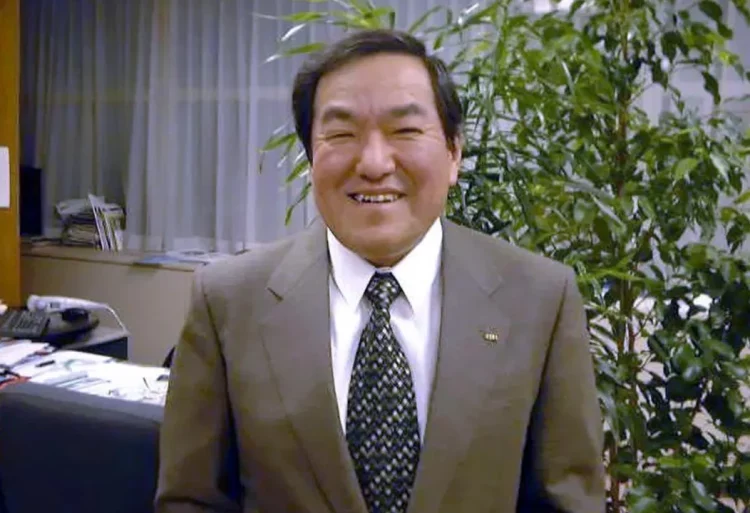
Sato’s role increasingly involved negotiating with external chip manufacturers, a process often less favorable to Sega compared to rivals Sony and Nintendo. Given Sega’s focus on powerful arcade hardware, the culture of cost-cutting for affordable consoles was new. The 16-bit CPU used in arcades was too expensive for commercial use. Sato’s negotiations were less than elegant. He bypassed Japanese executives to secure a price of 300 yen by guaranteeing an order of 300,000 units from the American branch of a chip manufacturer, planning to sell any leftover chips for 500 yen in Akihabara if necessary. This worked. The Mega Drive’s design, was intended to be future-proof. Its stereo sound aesthetics (designed by an external design company), the prominent “16 BIT” lettering, and the foresight to attach peripherals like a karaoke machine or CD player were all part of this forward-thinking posture. Still, the Mega Drive initially appeared to be another failure like its predecessors (SG-1000, SG-1000 II, Mark III). The external developer Thunder Soft’s Thunder Force eventually reassured Sato about his hardware choices.
While Sato “did the right thing with the hardware,” it was Sega of America’s savvy marketing, leveraging Sega of Japan’s No. 1 game Sonic the Hedgehog, that made him feel “we did it!” However, Sato observed that Sega’s corporate culture was not cautious or meticulous. Despite sales reaching 460 billion yen (with the Mega Drive/Genesis in Europe and America, Master System in Europe and South America, and arcades worldwide), putting Sega on track for a trillion yen, the company’s tendency to embrace new things and “blow money rather fast” led to expensive failures like the TeraDrive, which successful sales could fortunately absorb for a while. Sato noted that refinement was not Sega’s strength; for instance, after Sega’s Head-On (the first dot-eating game), Namco refined the concept to create the vastly more successful Pac-Man. Sato felt the biggest organizational fault was the lack of tight control over both arcade and console development under a single person. His hardware teams were under him, but the overall game development, a vast internal network making games for all kinds of console and arcade systems, developed independently. Ideas like using the MyCard format to transfer data between arcade and console and vice versa, were never seriously developed.
Sato recognized that 3D was the future, though sprites were the mainstream. Through the CSK software subsidiary CRI, he learned that 3D graphics’ future lay in the military industry, specifically with Lockheed Martin’s subsidiary GE. In the realm of 3D, Yu Suzuki was Sato’s key partner, pioneering with Virtua Fighter and Virtua Racing, but translating this progress across the entire company was a struggle.
He also fondly remembered the prestige of being courted by Bill Gates, CEO of the then small Microsoft, when Sega managed to downsize its 8-bit and 16-bit consoles into the Game Gear and the MegaJet (a Japanese airplane version of the Sega Nomad). The Game Gear’s color display production also contributed significantly to color LCD development.
Sato identified a core difference between the two rivals: Nintendo was a shrewd, smart company from Kansai, while Sega was a more straightforward Tokyo company. Nintendo benefited from established wholesale distribution, retailer relationships, and exquisite timing in buying semiconductors at the right price. Sega, in contrast, bought chips for the Mega Drive and Saturn when stocks were limited. Sato was by own accord rather baffled by Nintendo’s great timing. Game development culture also differed: Konami, Namco, Taito, Sunsoft, Capcom, and others, who intensely competed in the arcade space, were happy to develop for Nintendo, which relied on external libraries. Sega, however, largely did everything on its own, as the companies that they competed with in the arcades were less friendly to them.
The rivalry with Sony was even more intense. Over dinner, Sony’s Ken Kutaragi laid out his strategy: Sony could develop all its chips and even the CD-Drive internally, while Sato had to negotiate with Hitachi, Yamaha, and NEC, allowing them to profit. Kutaragi suggested that Sega simply become a software company for PlayStation, offering preferential treatment. Sato refused, bolstered by the Genesis’s success in America. External pressures made his role difficult. The 32X, which Sato seemed to dislike (omitting it in a Famitsu retrospective), was highly requested by Sega of America to extend the Genesis’s life. Then, Sony’s PlayStation fully committed to 3D, demanding the same from all developers, rather than accommodating sprite-based games. As Sony had no internal development team, this was easy to ask. By his own admission, Sato’s method of enabling both 2D and 3D felt like doing justice to neither.
Finally, with the Dreamcast, everything seemed to align: Sato’s hardware teams were united, the NAOMI arcade hardware had one-to-one parity with the console, and the online capabilities fulfilled Isao Okawa’s long-standing computing vision that have been there since the AI computer days. However, sales staff in Japan pushed for a premature late 1998 release, which both Sato and Okawa felt was premature. Once again a decision outside Sato’s control, similar to the 32X situation. At the height of his hardware influence, Sato’s power was stripped away around the year-end sales of 2000.
Reflections on Modern Sega and the Industry
Sato noted that the scale of companies like NVIDIA and AMD, with thousands of dedicated chip engineers, far outpaced Sega, which could only muster a dozen engineers when he stepped back in the early 2000s. By 2005, Sega’s only viable approach was to incorporate mid-range PC components into its arcade machines. The industry has shifted; custom hardware, like the PlayStation 3’s, is largely a relic, replaced by x86 PC-like architectures with NVIDIA chips. Sato saw this coming, believing high-end technology was not Japan’s long-term strength, which instead excelled at maximizing efficiency in small memory spaces. The global success of American titles like GTA and Call of Duty and the triumph of the Xbox 360 over Sony were evidence of this shift. Interestingly, when asked about a hypothetical hardware future of Sega, Sato suggested it would look similar to what Microsoft or NVIDIA are doing today, cloud gaming and hardware becoming secondary.
Sato’s final stint in the video game industry involved navigating the corporate turbulence from 2001 to 2003. Most of Sega’s management, with the exception of developer Hisao Oguchi, who later became president, opposed the merger with pachinko/pachislot maker Sammy. The merger was a top-level deal between CSK’s Isao Okawa and Sammy Corp.’s Hajime Satomi, effectively ensuring it would happen. Given Sega’s mid-level staff general dislike of pachinko, this likely explains Sato’s attempt to orchestrate a merger with Namco instead. Not only was Sato down on the Sammy merger, the sales that Sega had on the then PlayStation 2, GameCube and Xbox did not make him feel enthusiastic, he described competing against other 3rd parties as a hostile environment. According to him, when Sega had their own platform, people were fenced in, forcing them to buy Sega software.
The Failed Namco Merger Attempt:
On May 8th, Namco withdrew its merger proposal, submitted on April 14th to Sega’s President and CEO, Hideki Sato. Namco’s letter of intent, sent on May 1st, had a May 9th deadline. Sega’s response on May 8th—”we are not in a position to give a concrete response at this time”—was interpreted by Namco as a sign that the merger was not yet ready for concrete discussions. Namco stated they would consider any future proposals from Sega in good faith.
Separately, Sega and Sammy had signed a memorandum of understanding on February 13th for a business integration, but on May 8th, they postponed the merger after disagreements over “management policies, future visions, and merger terms,” according to President Sato. He emphasized that the companies would continue to collaborate. Regarding the Namco proposal, Sato publicly stated that Sega aimed to “make a choice that maximizes corporate value, whether that be a merger or continuing independently.”
Following this period, Hideki Sato resigned. The Sega and Sammy merger proceeded, with Hisao Oguchi joining the new board as vice president, and Sato absent from it. It appears Sato actively delayed the merger that was eventually inevitable. Oguchi quickly agreed, stating his personal enjoyment of pachinko. A Sega-Namco merger was always difficult to imagine, given the complexity of combining their separate brand identities, especially with their arcade locations, and Namco’s own business troubles that led it to seek a merger with Bandai.
Sato remained within the Sega Sammy structure for a few years, holding positions at Sega Toys and the animation company TMS Entertainment, before leaving to establish Advance Create Inc., a company seemingly unrelated to video games.
Sato looks back on the Sega console days as an “enjoyable few decades.” Few can claim a legacy of the same caliber. The memorable hardware he helped create continues to influence the homebrew community years after the consoles’ commercial lives ended, leaving behind a personality and quirk that is missing from today’s hardware landscape.
Sources:
Oral Interview with Japanese University
Related posts:
 SEGA Retrospective: Sonic the Hedgehog’s Classic Trilogy
 The History of Sega Japan R&D, Part 3: Innovative Heights and the End of an Era
 The History of Sega Japan R&D, Part 4: The Current Sega
 SEGA Retrospective: From Wonder Boy to Monster World to Adventure Island and beyond
 SEGA Retrospective: Virtua Fighter 5 – Ten Years Too Early
Excellent read!