In this edition:
- Treasure’s founder once recalled putting a “baka” code into McDonald’s Treasureland Adventure (B-A-C-A) out of frustration with McDonald’s.
- But no trace of that code appears in the final game.
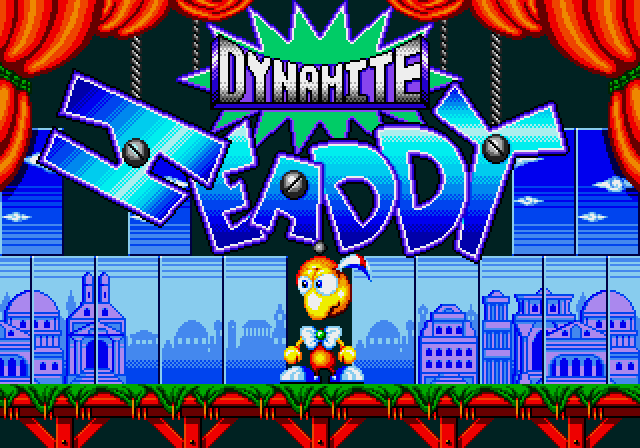
- However, I found it in Dynamite Headdy, Treasure’s next Genesis game.
Did Maegawa misremember which game the code was in? Or did Dynamite Headdy inherit the code from an early version of McDonald’s Treasureland Adventure? Read on to find out.
The “baka” code
Treasure, the well-regarded development studio behind games like Ikaruga and Sin and Punishment, also made a couple of licensed titles for McDonald’s, the fast food restaurant. When interviewed about them, Treasure’s founder, Masato Maegawa, recalled the process of making them to be somewhat frustrating.
This passage, from John Harrison’s Legends of 16-Bit Game Development book (pages 98-99), describes one particularly vexing incident:
Another last-minute change that McDonald’s demanded—unrelated to food—did push Maegawa over the edge.
The game’s second stage features the character Birdie the Early Bird, one of the more recognizable McDonald’s characters. Partway through the stage, Ronald comes across Birdie locked up in a circus cage. In the original version of the game, he feeds her some hamburgers and she finds the strength to break free from the cage and then flies away on her wings.
Maegawa recounted what happened when a McDonald’s representative saw the scene: “They told me, ‘Birdie can’t fly.’ Huh? She’s flying all over the place in the videos they gave me! I got so annoyed, so I made it if you push something like B-A-C-A-Start on the Sega logo screen, it explodes (laughs).” “B-A-C-A” spells the Japanese word baka, meaning “stupid.”
As Harrison’s book notes, this code didn’t actually make it into the final game. There are cheat codes in McDonald’s Treasureland Adventure, but there’s no “baka” code.
There is, however, a “baka” code in Treasure’s next Genesis game, Dynamite Headdy. It’s entered at the Sega logo screen: B, A, C, A, Down.

If you put it in correctly, you’ll hear an explosion sound effect. Then the Sega logo will drop off the screen dramatically.

Here’s a video of the effect:
Technical details
How does this code work? Here is how the logic that implements it looks in Ghidra’s decompiler with my labels added:
void check_sega_logo_cheat_0001243a(void)
{
  if (code_counter_ffffe8fe == 5) {
    logo_position_ffffe818 = logo_position_ffffe818 + -4;
    return;
  }
  if (p1_pressed_ffffe80b != 0) {
    if (p1_pressed_ffffe80b != (&code_buttons_sega_logo_0001247c)[code_counter_ffffe8fe]) {
      code_counter_ffffe8fe = 0;
      return;
    }
    code_counter_ffffe8fe += 1;
    if (code_counter_ffffe8fe == 5) {
      play_sfx_000118b6();
      return;
    }
  }
  return;
}
This is a standard cheat code detector. It compares player input to an array of patterns that represent buttons. Each match advances the array index, and each miss resets it. The array looks like this in memory:
| Address  | Value | Button |
|----------|-------|--------|
| 0001247c | 10    | B      |
| 0001247d | 40    | A      |
| 0001247e | 20    | C      |
| 0001247f | 40    | A      |
| 00012480 | 02    | Down   |
| 00012481 | ff    | (End)  |
After the last code button is entered, the 16-bit value at ffffe818 gets adjusted by -4 every frame. This controls the position of the Sega logo. Its default position is 0000, perfectly centered vertically. Subtracting 4 every frame moves it downward. The game doesn’t ever do it, but if you manually adjust the value to be positive, the logo moves upward:

I concur with SUDDEN DESU’s analysis in this Twitter thread – there isn’t anything similar in McDonald’s Treasureland Adventure. So did Maegawa misremember which game he put the “baka” code in? Or did Dynamite Headdy inherit from a build of the McDonald’s game that had it?
We may never know for sure, but my money is on the “wrong game” theory – here’s why:
- The February 1993 build of the McDonald’s game doesn’t have the code.
- The April 1994 build of Dynamite Headdy doesn’t have the code either.
- But the June 14, 1994 build of Dynamite Headdy does have the code.
The McDonald’s game was released in 1993, before the code ever appears in Headdy!
Outro
Thanks for reading. I hope you’ve enjoyed this exploration of a 3-decade-old mystery. For more on hidden things in Treasure games, see my articles on
Many thanks to Michael Stearns for pointing out the “baka code” to me. Thanks also to John Harrison for collecting the interviews with Maegawa for his book and for reading a draft of this article.