
Where does the time go? It only feels like yesterday that I reported on the one and only Yuzo Koshiro being hard at work on his first new Genesis/Mega-Drive game since 1995’s Beyond Oasis, which we later heard would be named Earthion. Now, before I even knew it, Earthion had released on Steam and just came out for modern consoles earlier this month. Limited Run Games also started pre-orders for physical copies of the game on those modern platforms until September 28th, as well, but have yet to open pre-orders on cartridges for your old Genesis consoles. (Sorry for not letting you know sooner.)
Yuzo Koshiro’s studio Ancient has been kind enough to offer us a review code for Earthion on Steam, and I have run the game through its paces many a times. Now that the wait to experience this modern Genesis classic is finally over, it’s time for me to report on how this shooter turned out. Suffice it to say, the game pushes the Genesis to limits never thought possible, but is the game fun to play? Find out now after the break.
(Neither Ancient nor Limited Run Games have influenced this review or seen it before it has gone live.)
Cleared for takeoff.
Earthion is a Genesis game through-and-through, running in a software emulator on Steam and on other platforms. Upon booting up the game, you are taken to a main menu outside of the actual game, which starts you off by allowing you to select your language. The menu and game are both available either in English, Japanese, or Brazilian Portuguese. Make sure you don’t get this mixed up, because you’ll want to check out the multitude of settings to refine your experience. There are a ton of options for customizing the visual filters, sound reproduction, and controls here. If you’re as into customization as I am, you may end up having a ton of fun just with this before you even start playing.
The visual settings allow you to adjust the filter going over the game screen and the borders surrounding it. There are many borders to choose from, including wood and metal panels resembling an old CRT television, artwork from the game, the Ancient logo, or nothing but black if you prefer no borders at all. You can also select from sharp or smoothed pixels, adjust the size and shape of the game screen, or make a fully customizable CRT filter with scanlines, curved edges, a glowing effect and an extra TV panel border that can reflect the game’s graphics, giving the illusion of light coming off of a CRT display. You can save up to five different combinations of settings when you’ve come up with a screen filter you like, or select from a few preset options.
The sound options give you just as much freedom to refine the audio, including low pass filters to give the audio an analog feel. This will go well with the CRT visuals to help sell the illusion of playing the game on real hardware, including an old TV like the one you may have grown up with as a kid. Considering this game comes from a legendary game composer, this is for any of you who really care about getting the best out of his signature sound, but more on that later.
Finally, there’s the options for the controls. The game is automatically designed to optimally map buttons to any modern controller that Steam is compatible with or are designed with your console, but you can change them to your liking. It’s also worth mentioning that if you are using any of Retro-Bit’s Genesis or Saturn controllers, when the game’s control options are set to Raw Input, the game actually maps the buttons onto where they would be on a Genesis controller correctly. This happened with me, to my delight, so feel free to use your Retro-Bit controllers if you got them. If you have any other modern Genesis or Saturn controllers and this doesn’t work, remapping them on your own is simple enough. However, I had some trouble using the menus with the Genesis Mini 2’s pack-in controller, as the default mapping was too nonsensical for me to even navigate the menus enough to change it. The in-game options menu also allows you to remap controls so you can still do so playing the game from a real Genesis when cartridges are available.
Got all that? Lets finally move on to the game then.
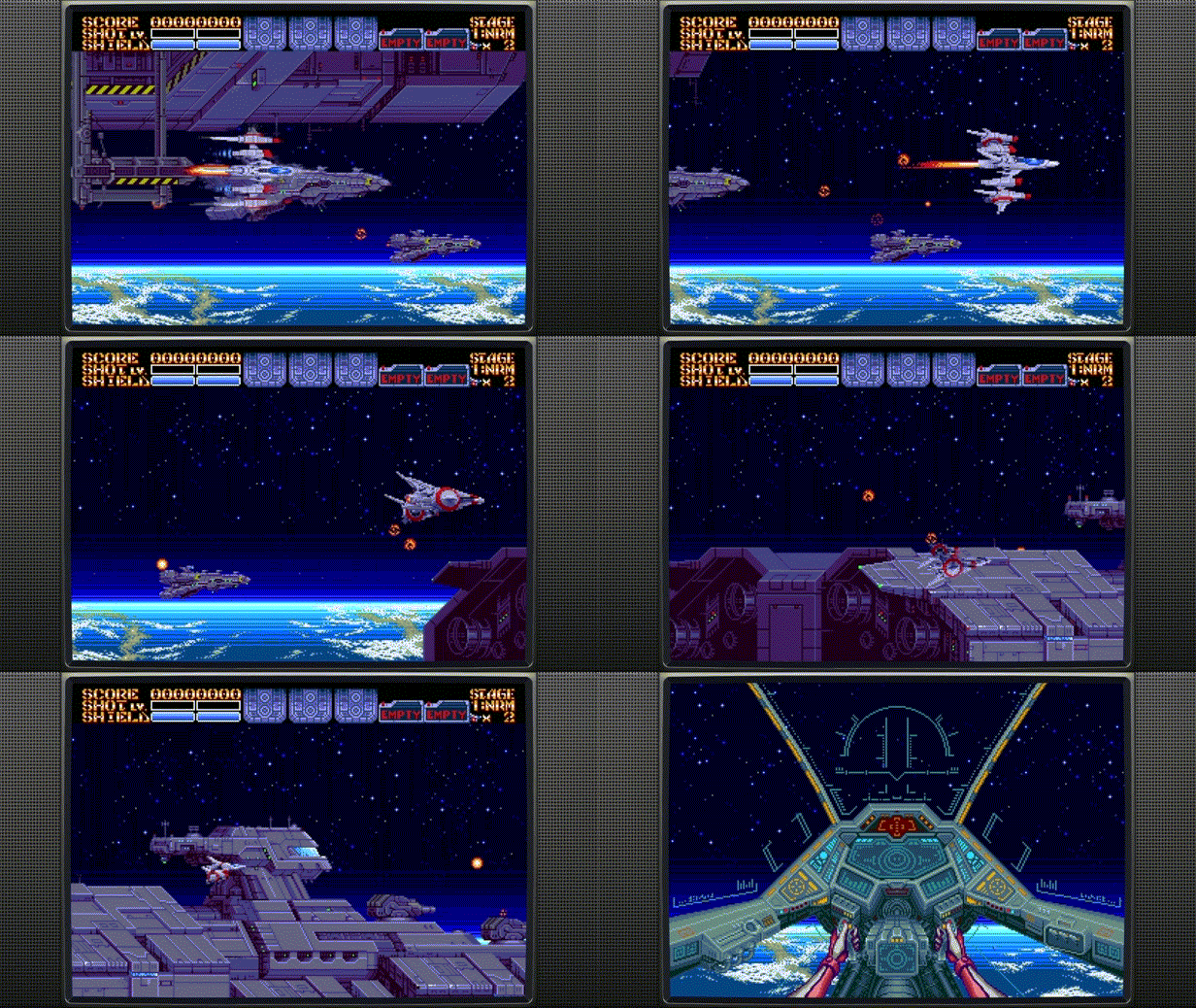 This Summer (or Autumn. Whatever), you will believe your Genesis can fly.
The game starts off silently as you get past the logos coming up on bootup and go into the title screen. After this, no matter where you go, that’s when things get loud. We know Yuzo Koshiro fans wanna know all about the music, since he’s the main composer, so we may as well cut to the chase. This game has phenomenal music unlike anything you’ve ever heard in a real Genesis game. It sounds nothing like Streets of Rage, the games he’s most well known for, but very few of the other games he’s worked on do. (The menu features Streets of Rage sound effects though, the same ones also used in the menus of the Genesis Mini 1 & 2, which he also composed music for.) Instead, you’re greeted with bombastic sci-fi tracks with some crazy drums. Right away, it sounds like a greatest hits compilation of original music inspired by some of the greatest Genesis classics from Konami and Treasure, even using some familiar sound samples from both.
Even the sound effects are likely to blow you away, right from the intro that sees your character operating the controls from inside the Earthion’s cockpit. Buttons and levers click and slide with such heavy tactile sound that you feel like you’re reaching out and touching some heavy machinery. The explosions are so bass heavy that you really feel the impact from those too. Throughout the game, you also hear very clear voices from Game Sack’s Joe Redifer announcing to you what sub-weapon you just picked up, like Thunder Force, or to let you know you’re doing great when a boss is nearly beaten. Unlike Thunder Force, however, the music doesn’t need to cut out to play the voices this time.
Yuzo Koshiro said himself on Twitter a while ago that when you play this game on your Genesis, you should make sure you’re set up with the best speakers you can use with the console, and he wasn’t joking around. It really makes sense why the game menu has such detailed options for the sound playback too. You really won’t believe a Sega Genesis can reliably pull off this kind of pounding sound. That said, the sound effects can drown out the music in game, so as nice as the sound is, it still is hard to appreciate the music while playing the game. The in-game options do feature a sound test option to allow you to enjoy the music at your leisure, though.
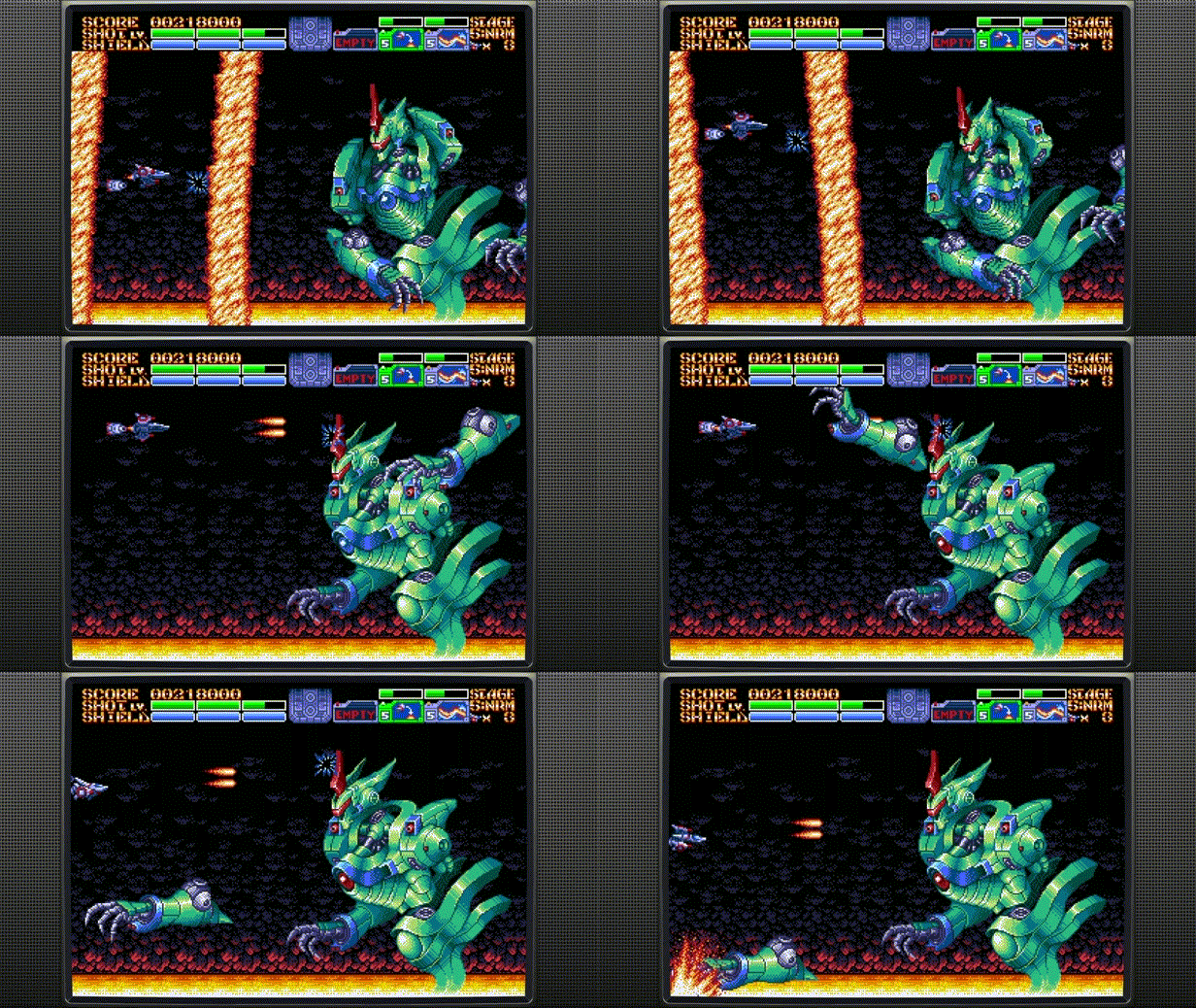 Gimmie a hand here.
Speaking of playing the game, lets finally get to that now. Earthion features a familiar system for shmup fans, but with its own unique twist. You have one button to fire your main gun, another button to fire your sub weapon, and one to swap between sub-weapons if you have more than one equipped. If you’re using a 6-button Genesis controller (Or pretty much any modern day controller), you’ll also have buttons to fire both weapons simultaneously or separately or to cycle sub-weapons left or right instead of in one direction only. You can hold multiple sub-weapons at a time, which get dropped by certain enemies, and some sub-weapons are clearly meant to be used in certain parts of a stage to make things easier. This is actually hinted at by the fact some Steam achievements require you to beat certain bosses with a certain sub-weapon that’s given to you in that same stage, and that sub-weapon noticeably makes scrap metal of those bosses in no time flat, while certain others are much more difficult to use in those situations.
Right before you reach the boss of a stage, you are presented with an “adaptation pod” that takes up a sub-weapon slot. It won’t do anything if equipped, but if you choose to keep the pod and manage to hold onto it until the boss is destroyed, you can choose between multiple upgrades for your ship to bring with you for the rest of the game. You can increase your maximum shot level and shield, which also further strengthens your sub-weapons, increase your sub-weapon slots so you can hold more sub-weapons at a time, give yourself an all new sub-weapon right away, or give yourself an extra life. When you understand the best strategies and sub-weapons to deal with each boss, then these upgrades are worth going for after each stage, but you have to choose your upgrade carefully.
When you pick up a sub-weapon while your sub-weapon cache is full, the sub-weapon you had previously equipped gets dropped right in front of you. This also occurs when you pick up the adaptation pod. The weapon doesn’t fly far from you though, so if you’re busy dodging relentless enemy fire, you could accidentally pick that old sub-weapon back up, which drops the new sub-weapon in front of you. Depending on your movements, you could either constantly switch sub-weapons or leave behind the new sub-weapon you were trying to pick up or the old sub-weapon you wanted to keep. This can get frustrating in such cases, especially if you know you’re coming to a point in a stage where having a particular sub-weapon is critical or if you really want the adaptation pod to upgrade your ship with.
What also gets annoying is how slowly sub-weapons activate after switching from one to another in your cache. Unlike most shooters that give you multiple sub-weapons to switch between at will, like Thunder Force, your ship in Earthion has to take a second to withdraw the sub-weapon and pull out the one you’re switching to. The upside is that you do get to see the module that fires the sub-weapon trailing your ship at all times, though it won’t block enemy fire like the pod in R-Type. The slow switching of weapons does make the ship feel a lot more mechanical, helped by the crunchy sound effects, to remind you you’re piloting a state-of-the-art and weighty spaceship with moving parts. However, most of you would prefer snappier weapon swapping in the heat of the moment, and I couldn’t blame you.
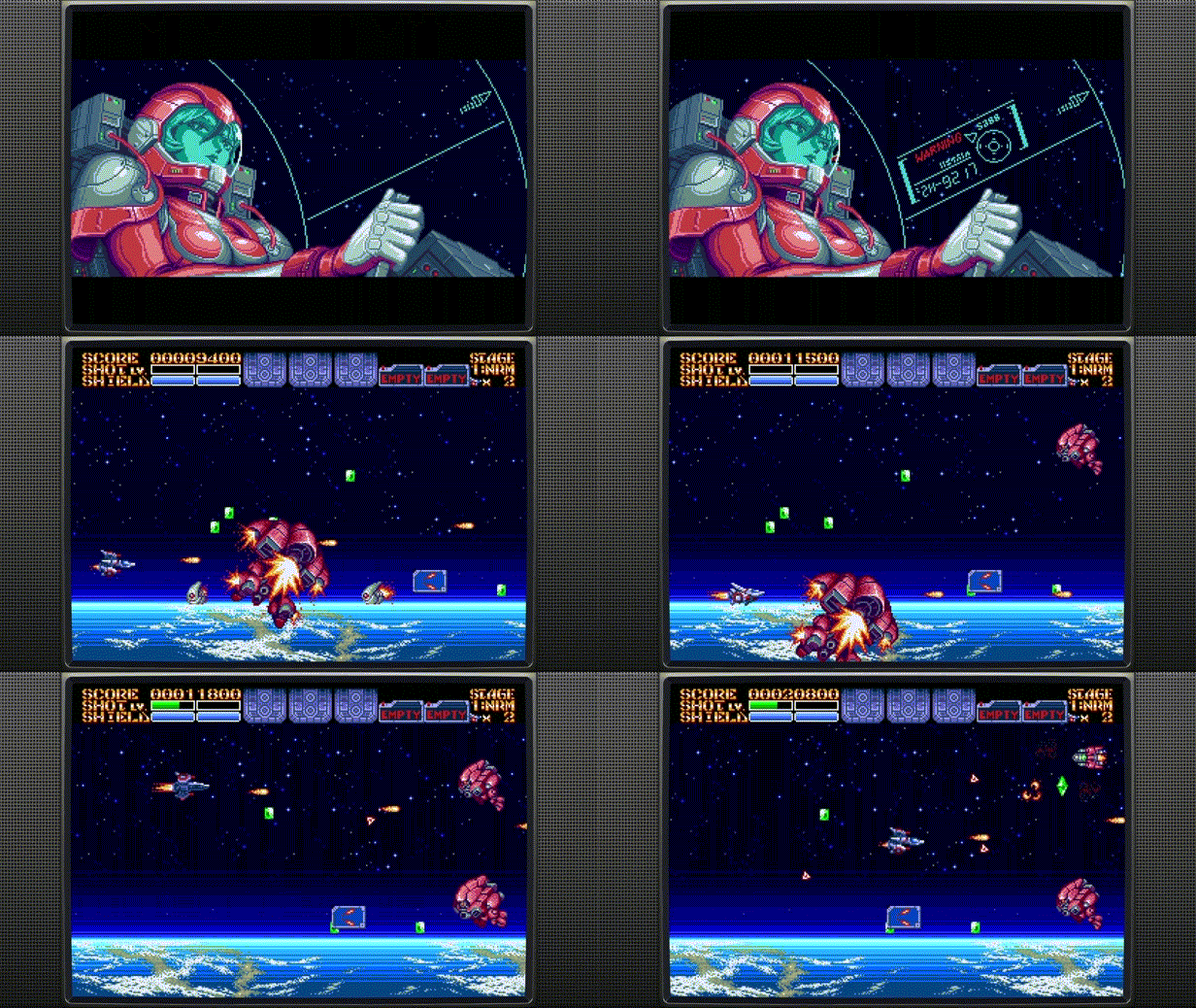
It’s all in the jewels.
There are also green gems constantly coming out of enemies and debris after you destroy them. These power up your shot level and your shield. The shot level is your main and sub-weapon’s power level, and the higher that is, the more effective each weapon will be. Your shield protects your ship from destruction, resulting in a life lost, but with green orbs always appearing, you’ll feel a lot less pressure if you get overwhelmed with enemy attacks, until you hear “WARNING”, meaning your shield energy is empty and another direct hit will finish you off. Of course, it’s also hard to tell when you’ve actually been hit, as your ship has a small and easily missed visual indicator that you’re hit, and if there is any sound, it’s usually drowned out by the explosions and music. Only the aforementioned “WARNING” can be heard clearly above all else.
Just like the music feels inspired by classic shooters from Konami and Treasure, so too does the style of gameplay. There’s also a lot of Compile and Technosoft’s DNA in there as well. This game is clearly taking after legendary classic shooters like Thunder Force, Aleste, Gradius, Thunder Cross, Alien Soldier, and so on. If you played a lot of those games, this will feel like the best of all of them cranked up to 11.
What also feels inspired by a who’s-who of shooters is the stages. True to the title of the game (Which is also the name of the ship you pilot, if you haven’t figured that out), the game starts you out above the Earth’s atmosphere with a clear view of the blue planet below you, which looks stunning, of course. Other stages take you to some wild new areas, including a planet of lava, the post-apocalyptic ruins of a city, an interior area overrun with grotesque biological mutants reminiscent of R-Type or Life Force, and the exterior of a huge battleship where you fly around it shooting off its various thrusters and cannons. I’d hate to spoil the last stage for you, but I have seen it and it is a trip. The sense of progression is also palpable as your ship gets visibly souped up in the final few stages as part of brief in-game cutscenes. Add in the improvements you likely get from adaptation pods, and the improvements to your ship really help you feel like you’ve come a long way and that it’s made you much stronger.
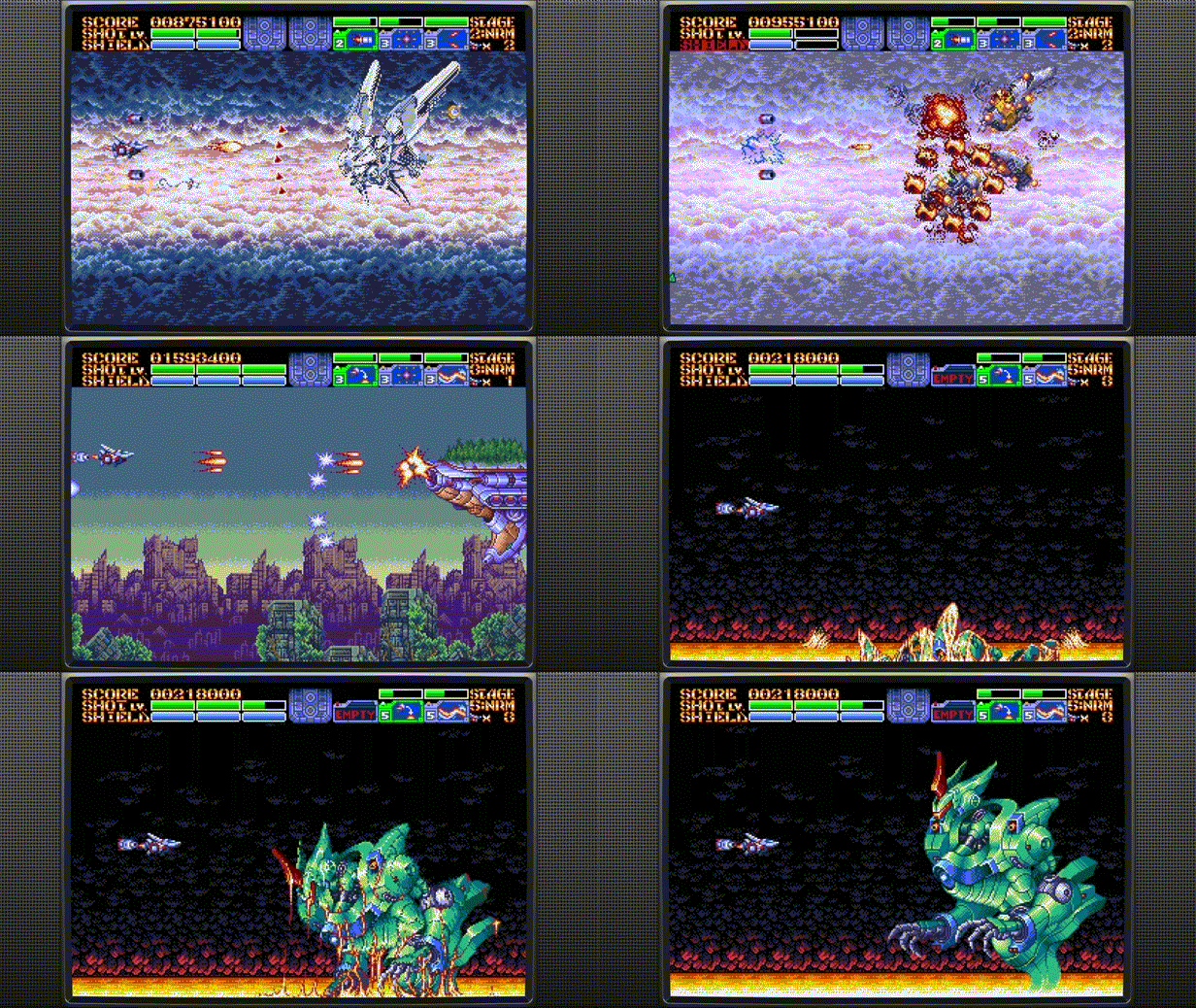 Genesis Does way more than you thought.
As I’m sure you can tell from all these GIFs I’m showing off here, the game looks as good as it sounds. Remember, this is a Genesis game designed for Genesis hardware, which you’ll soon be able to buy cartridges for. The visual trickery extends to the gameplay as well. Some parts of the game have you watching out for enemy fire coming from the background, with visible reticles placed over anything scaling that can hit you. It may be tough to tell when something is close enough to make contact with your ship, but even with all the visual overload, the reticle is very clear and I had no trouble missing it. Because this is still Genesis we’re talking about here, sprites still don’t scale in with all the grace of the arcade version of Space Harrier, but it does look much better than, say, the way Space Harrier II or Super Thunder Blade tried to simulate the effect on Genesis. On rare occasions, there are also enemies coming in from the foreground too, but enemy bullets never come in from the foreground.
You would think all the visual effects would cause you or the enemy bullets to get lost in all the action, but I’ve never found this to be a problem. Your ship has a clear contrast with all the backgrounds in the game and most enemy fire flashes colors to keep it from blending in with anything else. You’ll be able to clearly see anything coming your way. I’ve never seemed to have trouble understanding what parts of the environment can cause damage if you collide with them either, which is a constant worry in many shooters for me. Sometimes shooters with multiple background layers make it tough to tell what parts of the environment are on the same plane as your ship and which ones are not, but Earthion doesn’t have this issue. Anything that scrolls alongside you and enemy ships can be crashed into. Keep in mind that this won’t instantly destroy your ship thanks to your shield system.
Besides the main story mode, the game also has a unique score attack challenge mode. The game will give you multiple different stages to select from and each one puts you into an endless wave of enemies and obstacles. You just have to survive as long as possible while gunning down as many enemies and debris as you can to get your highest score. In the Steam version, and presumably the modern console versions as well, your scores can be documented on the online leaderboard, giving you plenty of motivation to practice to achieve the highest score possible. The mode is really fun and incredibly exhilarating, and with this game’s rather forgiving shield system, you might find yourself lasting a lot longer than you’d expect if you have a decent grasp on the game.
The only other gameplay mode, accessible through the main menu instead of the game’s title screen menu, is a selection of pre-release versions of the game that you can try for yourself. This includes various betas and trade show versions of the game. You might even remember a few of these from the tweets that Yuzo Koshiro put out showing the game in-progress before his studio had even settled on a title for the game. Make some time for this if you’re really interested in what the game looked like back then and how much its changed and improved.
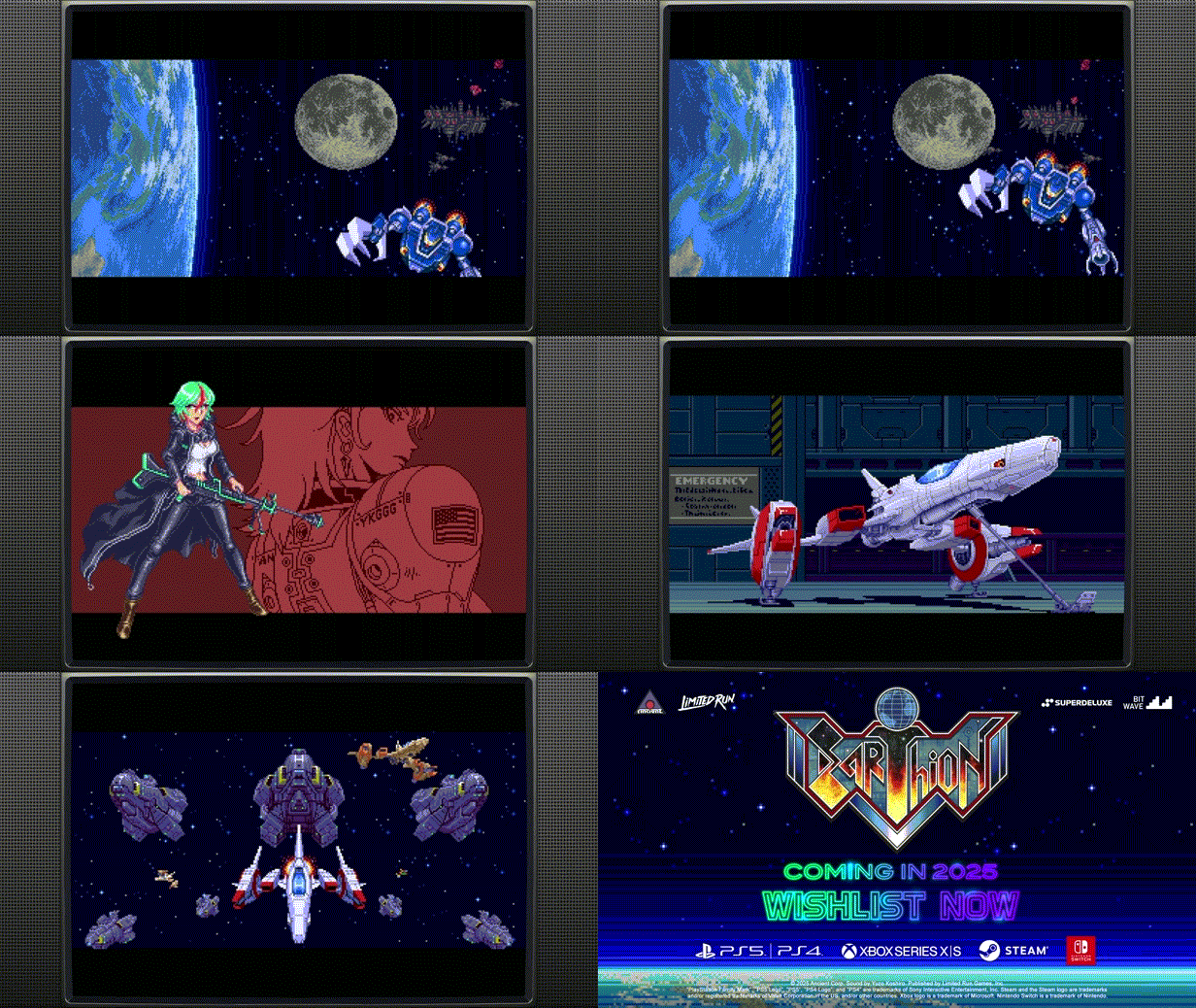
Verdict:
I do not say this lightly, but even as a game quite literally built for a console over 3 decades old with some major hardware limitations even for its time, Earthion puts many games of its ilk to shame. Not only is this a major technical showpiece for a retro game console, the kind you almost never see for any retired game platform today, but it is an incredibly fun and shockingly user friendly shooter. It strikes a balance between forward thinking modern features and systems that harken back to some of the greatest shooters of yesteryear. Even if action can be a bit overwhelming, you never truly feel outmatched due to the forgiving shield system and the game is built around making you plan out your upgrades and sub-weapons for maximum power which you really start to feel. The sound mixing can make the game sound like audio noise, but when you sit down to take in the music and mechanical sounds, it really pulls you in in ways even retro-style games not bound by a 16-bit console’s hardware limits often struggle to.
Not only that, but you have to appreciate the fact this game came from a team of old masters with an undying love for the games they not only grew up on, but who built their very careers making some of those very same games. A lot of developers with a major passion for old game systems are capable of making some truly wonderful content on those consoles today, but only once in a blue moon does a team of developers who actually worked on some of the best original games for that console come back to show us all how it’s done just one more time. If you love the Sega Genesis, whether you’re a new fan or an old fan, cherish this moment and have a blast.
Earthion is currently available digitally on Steam, Nintendo Switch, PlayStation 4 and 5, and Xbox for $19.99 USD. Physical versions for each platform remain up for pre-order on Limited Run Games until September 28th, 2025, this Sunday, at 11:59 PM EST. If you hurry right after reading this, you might still be able to get one if you want. Limited Run Games will also offer up physical cartridges for Genesis consoles in North America in 2026.
The game’s digital soundtrack is also currently available from Brave Wave Productions on Bandcamp for purchase or for streaming.
Positives:
- The game’s visuals are outstanding and push the Genesis beyond its limits.
- The forgiving shield system make the game approachable while preserving the challenge shooter fans love.
- Multiple sub-weapons and ship upgrades give you plenty of room to strategize.
- The music shows Yuzo Koshiro’s not even close to losing his touch.
- Tons of options for customizing visual CRT filters and analog sound delivery (Perfect for helping you wait for the chance to finally play the game on original Genesis hardware.)
- Challenge mode gives you a fun mode to push your skills more than the story mode can.
Negatives:
- Audio balancing can sometimes drown the music out in an unrelenting torrent of sound effects.
- Sub-weapons drop too close to your ship after replacing them, causing you to constantly pick them up again and again.
- Sub-weapons take a little too long to switch out.

Related posts:
 Earthion releasing for Genesis/Mega-Drive and modern consoles in 2024 from Limited Run Games
 Review: SEGA Genesis Classics Pack 1
 Retro Review: Space Channel 5 (Sega Dreamcast/PS2)
 Review: Retro-Bit SEGA Genesis BIG6 Arcade Pad (Wired Console & 2.4 GHz Wireless versions)
 Ancient/Yuzo Koshiro’s new Genesis/Mega-Drive shooter now named “Earthion”; Video footage shown
Really want this game on Genesis but hate getting stuff from limited run game. They’re so slow.
you may not like it, but there’s always repros.
Before you consider that route, there are a lot of patch updates to the game that also patch up the ROM within. The long wait for pre-orders on cartridges is probably cause they want to publish cartridges with the most optimal build of the game. Can’t patch a Genesis cartridge, after all.
That’s true. Didn’t think of that. That being said, I had to wait way too long for the ps4 version of rocket knight collection and it really soured me on limited run games.
Also I have no problem buying repos. In fact one of my prize possessions is my repo cart of twinkle tale.
Well, they don’t print any copies until after pre-orders are done so they know how many to print, unlike any other publisher. That said, I understand the wait can be annoying.
You’ll at least wanna make sure your repros are made with quality in mind though. Too many repros from dubious sources have non-beveled edges and/or chips with improper voltage, both of which could potentially damage your console. LRG dropped the ball a few times, but the one time they had cartridges made like that, they at least recalled it. I’d take a closer look at that Twinkle Tale cart if I were you.