SEGA-AM2 could really thank most of its success to how popular the game Hang-On was in 1985. This game really opened up for all those other popular SEGA-AM2 peusdo 3D scaler games that we all love today like Space Harrier, Out-Run, Afterburner, and many more.
The track above is called ‘Theme of Love’ and love is probably what kids in the mid-eighties felt when they played this game for the first time. Every time I hear any music from a early SEGA-AM2 games it just fills me with nostalgia and Hang-On‘s Theme of Love does it the best. It just does everything right and is an excellent piece of music.
Hello and welcome to another exciting edition of The Weekly Five where we make a list of various SEGA topics. I’ll be your awesome host, George and today we will be looking at five SEGA-AM2 arcade exclusives that deserve a home port. I used console in the title, but honestly I’ll take these ports on PC as well.
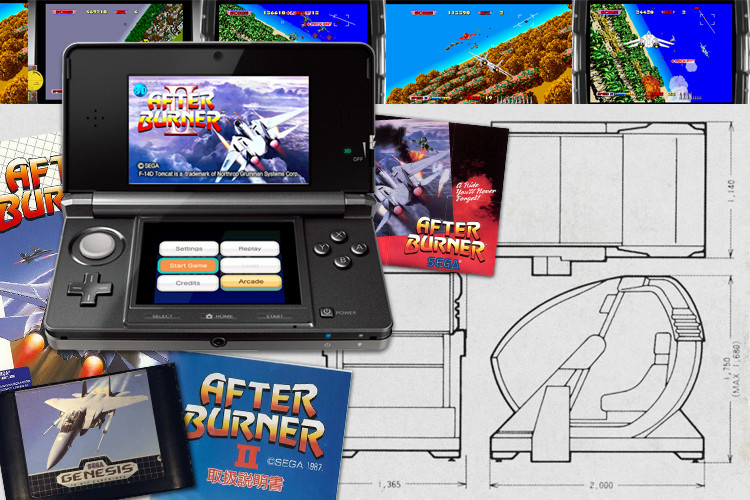
After Burner is just one of those franchises by SEGA that took American arcade goers by storm due to the sheer speed of the game, the eye catching cabinet, and its highly detailed (for the time) graphics. I truly believe that After Burner is just one of those arcade games that don’t get enough credit by gamers today, so jump into your F-14 Tomcat and blast through our After Burner retrospective. You never know, you might learn something!
Before SEGA AM2 brought Shenmue to Dreamcast owners everywhere, they created a Japanese RPG in the late 80’s for the SEGA Genesis/Mega Drive. That title would help SEGA-AM2 dip their feet into the console market, that first game was Sword of Vermilion. The game was a early Genesis/Mega Drive title and was one of the spotlight games in SEGA’s timeless “Nintendon’t: advertisement campaign.
While Sword of Vermilion was ambitious for its time, it wasn’t really known as a great game and possibly one of the lesser known games by the publisher. But regardless of that status, the soundtrack for this game is actually great. Composed by Hiroshi Kawaguchi (After Burner, Out Run, and more) and Yasuhiro Takagi (Virtua Racing, F355 Challenge and more), both composers who where literally at the top of their game during this time period.
Looking back, the SEGA Saturn ad campaign in America was nowhere near as memorable as the Genesis and Dreamcast era campaigns. While the Genesis ads were funny and subversive, and the Dreamcast ads were magical and, dare I say “dream-like”, Saturn’s ads were both weird and forgettable. While some ads did stick in many people’s minds, I’m not sure it was for the right reasons. The “Fly Plaything, Fly” commercial, for example, was a risky move that didn’t pay off. SEGA did indeed beat Nintendo years prior, but in no way did SEGA’s Saturn topple Sony’s Playstation. As much as a Saturn fan that I am, I have to concede that it was the Saturn that was “not ready”.
Other Saturn era ads, like this week’s featured commercial for SEGA-AM2’s Virtua Cop, went with the gritty “is this a game, or is it real life” route. While 3D games were quite impressive at the time, and Virtua Cop is a fantastic game, it was far from being “a little too real”. In fact, those who bought and played the game would discover that Virtua Cop, much like AM2’s other games at the time, existed in a quirky arcade-like world where over the top things like a seemingly endless army of identical henchman and criminal leaders in helicopters shouting “meet your maker!” are common occurrences in the life of a cop. Had SEGA played up the frantic over-the-top gameplay of Virtua Cop, showing that the game is far from “a little too real” and was in fact like nothing you have ever played before, then maybe they might have had a better ad.
After the break, check out some Virtua Cop print ads from around the world! Could somebody explain that “Bum Bum Bum” ad to me?
Welcome to our new video series The Weekly Five, a top five list covering a wide range of SEGA topics. We are celebrating The Year of Developers over at SEGAbits.com, that means that each month throughout the year we will be covering notable notable SEGA developers. This month is all about a developer that is close to my heart, SEGA-AM2. What better way to kick off the new series than to discuss five ways SEGA-AM2 changed video gaming.
SEGA AM2 has a huge library of developed games, but nothing is more shocking at how much they change genres and still delivered a game that would defy that same genre. For example, Virtua Cop which in my opinion is one of the best light gun shooters around.
Nothing has a bigger impact on you than the first stage’s music. Its the song that draws the player into the game and Virtua Cop succeeds with its Stage 1 Theme: “Arms Black Market”, giving you that feeling that you and a buddy really are taking down this black market gun rig.
SEGA and Atlus have had a long history together. Before SEGA bought the company in 2013, the companies collaborated on various titles which appeared on home console and arcade hardware. 1997’s Groove On Fight: Gouketsuji Ichizoku 3 was one of these titles, the third in Atlus’ Gouketsuji Ichizoku/Power Instinct series of fighting games.
In this week’s My Life with SEGA, AJ and Mickey Mac put Groove on Fight to the test! Is this really one of the best SEGA Saturn games you’ve never played?
SEGA AM2 is just one of those developers that always puts a smile on my face whenever I talk about their games. Not only do they have one of the most vast libraries, but they also revolutionized gaming in general multiple times over the past decades. Let’s look at the developer that popularized sprite-scaling in the 80s, gave us modern 3D with their Virtua series and created one of the most expensive games ever as we walk through their legacy.
Don’t forget to join us all month long while we talk more about SEGA AM2 and all their legendary franchises.
It has been an interesting year for SEGA games. During the first few months of 2014, Western SEGA fans had very little when it came to new games, while those in Japan enjoyed the puzzle mashup Puyo Puyo Tetris and the Yakuza spinoff Ryu ga Gotoku: Ishin!. Thankfully, those in the West had Alien: Isolation and Platinum Games’ Bayonetta 2 to look forward to, and in early February it was revealed that Sonic Boom would be releasing to the Wii U and 3DS. Another reveal came, much to the delight of the Hatsune Miku fanbase, with the announcement that Hatsune Miku: Project DIVA F 2nd was set for a Western release in November. Meanwhile, fans of Relic Entertainment and The Creative Assembly’s real time strategy PC titles were treated to Total War: Rome II DLC and Company of Heroes 2 standalone expansions Ardennes Assault and The Western Front Armies.
Suffice it to say, the year has been mixed but not a disappointment. While certain blue hedgehogs failed to give us a good game, fans who step outside their comfort zone of Sonic and traditional SEGA games will find several great titles from SEGA. What are these great games? Read on to find out what our favorite SEGA games of 2014 were in our annual year end round table!
Jingle Bells, Sonic smells, Saturn all the way! Oh what fun it is to ride in Opa Opa today…
Terrible rhyming aside, it was recently Christmas, and this calls for This is Saturn to get festive with the much-loved NiGHTS demo, Christmas NiGHTS! But are those who love it just looking through frosty, but rosy-tinted nostalgia lenses? Or is this demo really more than meets the eye? Find out, on this special Festivus episode of This is Saturn!
This is Saturn is a video series created by British teenager Liam ‘TrackerTD’ Ashcroft, aiming to give an alternative and in-depth look at the good, the bad, and the ugly of SEGA Saturn gaming, all whilst maintaining a somewhat strong accent.
SEGAbits and Sonic Retro team up to bring you a podcast focused on SEGA’s new Sonic Boom franchise! Hosted by Barry the Nomad of SEGAbits.com and David the Lurker of SonicRetro.org, Boom Talkalaka features discussion of the many aspects of Sonic Boom – from comics and episodes of the cartoon, to the video games and toys.
In the second episode, Barry and David review the latest episodes of the TV show through to “Eggheads”, 2014’s final episode, discuss the direction the comic book is taking, and Barry shares his thoughts on the 3DS and Wii U games.
Give the show a listen and in the comments tell us what you think! If you have any questions or comments you want David to read on the next episode, leave your message here with the subject line “Boom-Grams”: http://segabits.com/contact/
Today marks a big day for fans of Phantasy Star, as it’s the 27th anniversary of the original game and the franchise as well. On December 20th, 1987, SEGA’s now iconic RPG released to the Sega Mark III. Following the original’s release, three numeric sequels released to the SEGA Mega Drive/Genesis and further installments released to numerous other platforms. The series has come a long way since 1987, and it’s amazing that it continues to this day with the releases of Phantasy Star Online 2 and Phantasy Star Nova. But rather than focusing on the newest installments, and grumbling about how we still can’t play them in the West, let’s take a trip back to the Fall of 1988 when SEGA’s The Team SEGA Newsletter previewed Phantasy Star for the Master System.
SEGAbits Plays gets into the festive mood as Barry and George play Dr. Seuss’s The Grinch and the Official Dreamcast Magazine demo disc Volume 10 for the SEGA Dreamcast. Join us as we destroy Whoville, fly about as a little toy Santa in Toy Commander‘s Christmas missions, and explore various demo disc oddities. Wait, was that an anti-smoking advert?
This week on My Life with SEGA, Andrew and Mickey Mac dive into the trenches with a run-and-gun arcade classic from SNK, Metal Slug.
While the game is both addictive and exciting as a single player experience, it’s best enjoyed with a friend. Sadly, we’re getting these two jackasses that aren’t even capable of taking on the Empire without wanting to kill each other.