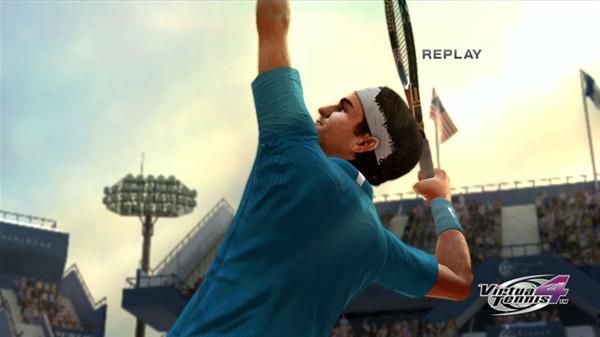
SEGA releases Virtua Tennis 4 (PS3) Commercial

SEGA has released what looks like the North American TV commercial for Virtua Tennis 4, which they’ve posted to their blog and on Youtube.

Just in case anyone’s confused, yes, this is actually a multiplatform game, though you can’t tell it from the commercial.

[Source: SEGA]

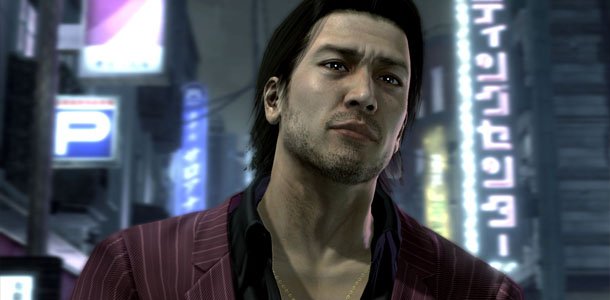
Yakuza Week: Favorite Yakuza 4 tunes

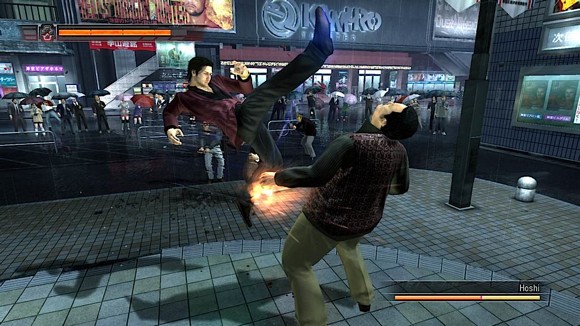
In celebration of…I guess we’re calling it Yakuza Week, (rad) I figured it would be appropriate to dedicate some time to the music of the recently-released Yakuza 4. Their soundtracks have been one area that this series has always excelled in, and Yakuza 4 is certainly no exception. The adrenaline-pumping and guitar-heavy soundtrack returns, of course, as do the power balads, and let’s not forget those crazy Japanese karaoke songs. Here are some of the songs I found to be memorable in Yakuza 4, and I encourage you to post/discuss yours in the comments section below!

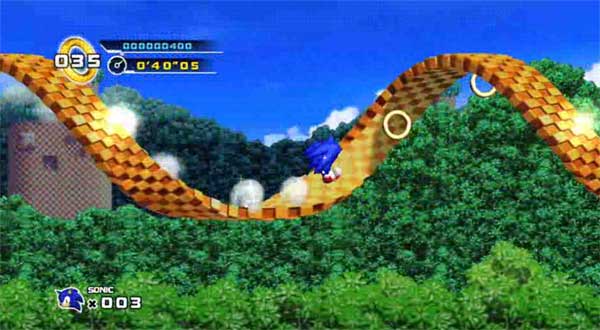
SEGA Europe gearing up for Sonic’s 20th with back-to-school merchandise

2011’s the year that Sonic turns 20, and SEGA Europe’s making sure that everyone knows it. Heading to retailers in the UK and Ireland this summer are Sonic backpacks and other back-to-school stationery items. Several shops have already placed orders for the Blueprint-designed stationery, including WH Smith, Tesco, Debenhams, Morrisons, and Next.

“I believe there is still a vast untapped potential for licensing based on games, and we will see an increase in overall sales as more retailers start listing the stock and see the results in their sell-through numbers.”

-Sissel Henno, head of brand licensing for SEGA Europe

I imagine this is only the tip of the iceberg. Expect to hear much more about Sonic merchandise in the coming months, especially as his big 20th Anniversary game gets closer to release in the back quarter of this year.

[Source: MCV]

SEGA Sequel Saturdays Presents: F-Zero GX

Hello and welcome to your weekly dose of potential SEGA Sequel Awesomeness (yeah I did just say that). Before I get started on Episode 14, though, I’d like to give a shout out to another pretty amazing sequel that has nothing to do with SEGA. As anyone who has been following my Twitter likely knows by now, I’ve been seriously loving the new Mortal Kombat game. If you’ve ever been a fan of the Mortal Kombat series, especially games 1-4, I’d definitely recommend checking MK9 out on your HD system of choice, really a lot of fun.

Anyway, without further ado…this is one I’ve been wanting to write since last week, when IGN’s Martin Robinson did an article celebrating the Amusement Vision-developed F-Zero GX. After reading his piece, what I had always thought in the back of my head was brought completely to the surface: I don’t think a new F-Zero game could be as good as GX was without SEGA’s Amusement Vision back at the helm.

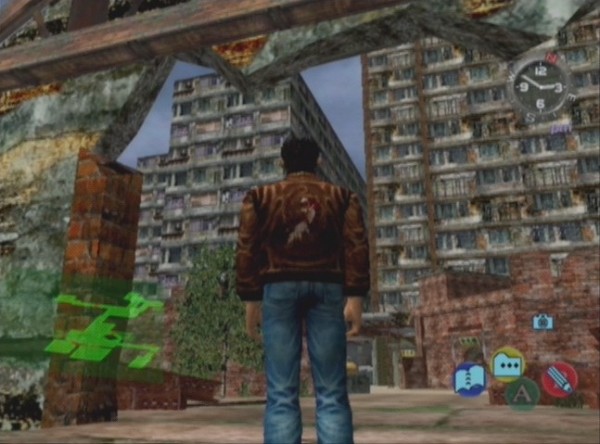
The guy behind the “shrill” NPC voice in Shenmue II explains how it came to be

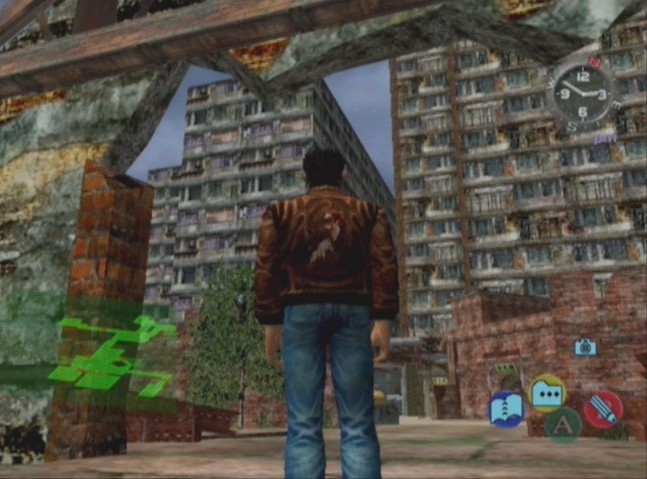
The Shenmue series may be known as a pioneer in a lot of ways…none of those ways includes the quality of its English dub. Shenmue Dojo yesterday posted a story from a voice actor who did some NPC voices from Shenmue II. Not a whole lot about the process we hadn’t heard from Jeremy Blaustein’s revealing interview a while back, but I still got a few chuckles out of this.

The actor, who asked to be anonymous (though Shenmue Dojo attests to his legitimacy), explained to his agent that he was not capable of altering his voice convincingly, but he was then asked to do just that when he showed up for the Shenmue II recording session.

For the next role, I was asked to do the voice of an old man.
My agent, who was in the control room, did not say anything at all. In fact, I saw the agent ducking out of my line of sight. Nothing from the agent about the fact that I had accepted the job on the condition that I not have to alter my voice. Because my voice characterizations are not good and game players will notice the poor quality. And no clearheaded game producer wants to put bad voices on their project. Right?

Once again, I was on the spot. Well, it’s their game, I figured. One standard elderly-man voice coming up.

My favorite part of this story would have to be when this actor reveals that he was also the one responsible for that quirky NPC with the high-pitched voice, and I actually have a feeling that I know which voice it was.

One of the characters was described to me as an especially weird fellow and they needed an appropriately weird voice. They played some scenes on the monitor. They gave me a moment to think of a voice style.

They didn’t like my first attempt and neither did I.

The next attempt was a shrill, scratchy concoction that actually hurt to do. “No way will they want this voice,” I thought.

They loved it.

I had a created a voice that sounds like a cross between Clint Eastwood and Richard Simmons.

As I was recording, I remember thinking to myself “This character voice is terrible. If I were playing this game and heard this voice, I’d turn off the sound.”

He also discusses how he and a couple other actors improvised the background chatter of the Heavens gang, the small studio in which the recording was done, and his declaration that he will never accept video game voicework again. Pretty entertaining.

[Source: Shenmuedojo]

IGN does feature entitled “F-Zero GX: The Speed of Sega”

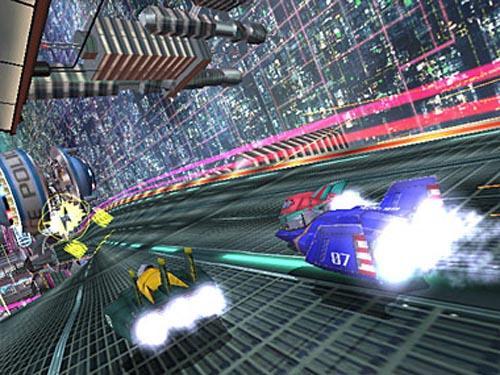
IGN’s done a feature today celebrating F-Zero GX, and how the collaboration between Nintendo and SEGA arguably made this game the pinnacle of the F-Zero series.

F-Zero GX was much more than a mere continuation of the series, though. SEGA’s blue sky thinking brought vibrancy to a world that previously treaded murkier waters, and it did so with style. Powered by SEGA’s Triforce arcade hardware – for which Nintendo’s GameCube provided the foundations – F-Zero GX lent Nintendo’s world a robust makeover.

It was also unmistakably a SEGA game. Amusement Vision was the team behind F-Zero GX, headed up by a Toshiro Nagoshi who was fresh off of making Super Monkey Ball, and its outlandish backdrops owe much to that game’s colourful fancy. Neon clowns loom above Casino Palace, a gigantic ROB controller gyrates in the background of Port Town and giant sandworms dance across the skies of Sand Ocean.

The courses also bear that indelible SEGA stamp. They’re extravagant, often torturous and as memorable as a pop classic, a fact that can be accredited to its creator’s methods. During the game’s development Nagoshi likened designing tracks to penning a rock anthem; each should have its own rhythm, complete with chorus, middle eight and a hair-raising solo.

To check out the full article, head on over to IGN.

Nice read and a celebration of one of the best racers I’ve ever played. I’m also proud to say that I did manage beat all 7 challenges in the Story mode…well, on the normal difficulty setting, anyway.

SEGA Sequel Saturdays: Ecco the Dolphin

This will actually be a short one because all things considered, I haven’t spent a ton of time with this series. (And welcome to Episode 12.) I remember my first experience with Ecco was on the Sega Genesis with Ecco: The Tides of Time, which was actually the 2nd game in the series. As a little kid I struggled to get a grasp of how the game worked, and after many tries, I was finally able to progress through several levels, but was never able to finish it. I was a little older when Ecco the Dolphin: Defender of the Future hit the Dreamcast, but found myself making even less progress, taking countless tries at the demo (which was the game’s first level) before finally getting to level 2.

Immediately after I did that, I rented the full game and attempted to play through it, and the 2nd level was as difficult to figure out as the 1st. As it would turn out, I never got past the 2nd level. But what a seriously good-looking game it was. It’s actually pretty impressive, in hindsight, that Ecco the Dolphin: Defender of the Future carried several traits of, well, an open world game, and keep in mind that this was in the pre-GTA3 era. With the “open world” element having now become a staple of modern video gaming, it would be interesting to see this series given another try.

Why SEGA should stick with PlatinumGames

The closure of Clover Studio several years back was a sad day for the gaming industry, not only because they had just developed a multiple Game of the Year award winner (the beautiful Okami) but also because it was such a shame to see the developer of some of Capcom’s most interesting and innovative content getting the axe. It was a dose of reality: a reminder that originality and innovation doesn’t always pay off (and SEGA knows that probably better than anybody) in an industry that’s rapidly becoming more and more hit-driven and sequel-based.

The good news came shortly after, when it was revealed that the heads of Clover Studios had no intention of folding back inside Capcom. Instead, key developers Atsushi Inaba, Hideki Kamiya, and co. formed what would eventually become PlatinumGames, taking many former Clover Studios developers with them. In a move of pure brilliance, SEGA picked up the partnership, what turned out to be an incredible fit.

PlatinumGames “saddened” by current Japanese gaming industry

PlatinumGames President and CEO Tatsuya Minami recently wrote a blog post that can be seen at their website, and it’s clear that he’s not too thrilled at the moment with the Japanese gaming industry.

His problems with the current state of game development, especially in Japan, stems from what he sees as a lack of original content being created as franchises grow “ever longer.” He’s saddened by what he sees as too few Japanese developers creating games with “new” at their core, and Japanese games are, as a result, failing to achieve worldwide acclaim; in short, Minami says, Japanese developers have lost their vigor.

Going forward, the CEO promises that PlatinumGames will continue to strive to provide fresh and original content to a worldwide audience, and hopes that they will inspire other Japanese developers to do the same.

“At PlatinumGames, we strive to be the face of Japanese game studios on the worldwide stage. We want our contributions to not only be towards the games industry as a whole, but also be contributions towards our homeland of Japan. That is the principle that will guide our company into the future.

We aim to bring happiness to gamers worldwide. We seek to ignite a Japanese games revival. And our troops will have the highest morale.

We’re in this fight for the long haul.”

Tatsuya Minami
President and CEO
PlatinumGames Inc.
Spring 2011

To check out the full post, hit up their website.

SEGA Sequel Saturdays: Yakuza 5

Hey guys, hope everyone in Internetland enjoyed their April Fools day! Welcome to Episode 11 of SEGA Sequel Saturdays. This week I’ll be expressing my thoughts on the (inevitable) sequel to a game that just released, Yakuza 4. SEGAbits’ official review will be up soon, but you can read my own opinion on Yakuza 4 at my blog, here. I feel that Yakuza 4’s a fun game with lots and lots to do and some great storytelling, but at the same time, its formula is really beginning to show its age. I don’t think Yakuza 5 is even worth announcing if we’re not going to be getting some big changes and updates, and here’s what I think they should be.

Motion Control in Virtua Tennis 4 only for mini-games

Expecting motion controls (Move, Kinect, Wii Motion Plus) for the upcoming Virtua Tennis 4? According to CVG, you’re out of luck. Mini-games and Motion Play modes are said to allow for the motion controls that will be advertised on the game’s box, while the career mode, online play, and tournaments are said to only support standard controller configurations. Weird, right?

Well, that’s not all. Gamers who were planning on picking up the Wii version should take note that this version will not allow for nunchuck or classic controller support, instead, you’ll be forced to hold the remote sideways and use the d-pad. Yes, really.

The game comes out May 10th in North America and May 14th in Europe, though if you only own a Wii, I wouldn’t bother.

[Source: CVG]

IGN presents Yakuza 4: Fact or Fiction?

IGN has today released a feature entitled Yakuza 4: Fact or Fiction, where author Jake Adelstein and editor Daemon Hatfield sit down to discuss Yakuza 4. Jake has lived in Japan as a reporter covering the crime scene, and here he uses his knowledge to discuss the Yakuza and Yakuza 4’s relation to reality.

This is just a fun feature, nothing to get upset about, Yakuza fans. In fact it’s a genuinely interesting look at the Yakuza, how accurate the game’s hostess bars are, the possibility of the ramen shop scene being based on a real-life incident, and more. An interesting feature worth a look for fans of the Yakuza games.

SEGA Sequel Saturdays: Sonic 4 Episode 2

Episode 9 time, ladies and gentlemen. Back when SEGA announced that a return to 2D Sonic was being developed, (then code-named Project Needlemouse,) there was a surge of excitement throughout the industry and the fanbase. After so many years, and after a series of hit-or-miss 3D Sonic games, SonicTeam was finally about to deliver us a modern-day console 2D Sonic game. At the time, my opinion was that that SEGA absolutely could not afford to wuss out with the name: if they were really going to do this, I said, there was no point without calling it Sonic the Hedgehog 4. Sure enough, Project Needlemouse did become Sonic the Hedgehog 4, and well…read on.

New Conduit 2 trailer shows off international environments

Well clearly this guy’s been racking up the air miles….The new Conduit 2 trailer showcases many of the environments you’ll get to visit in SEGA/High Voltage Software’s upcoming Wii shooter. Locations range from the Bermuda Triangle (!) to Siberia, and from a city in the Amazon rainforest to the Southwest United States. And let’s not forget England and China.

I’m finding it hard to tell if all of these locations are from the single player campaign, or if we’re also getting a glimpse at the game’s multiplayer maps, since this trailer’s as frustratingly vague as the past few have been.

Conduit 2 releases exclusively for the Wii on April 19th in North America; Australian and European dates are the 21st and the 22nd, respectively.

[Source: IGN]

Best Buy selling Yakuza 4 for $40

Not exactly a news item in the traditional sense, but thought some would be glad to read this. Best Buy is holding a sale on Yakuza 4, selling it for only $39.99.

Apparently this sale is good through Saturday and includes both in-store and online. You can pick up Yakuza 4 for a heavily discounted price here.

Update: Good work, SEGA fans. Bestbuy.com has sold out of Yakuza 4 and the title is now on backorder. If you still want to purchase the game for a bargain and don’t want to wait for up to two weeks for more copies to be ordered, (or don’t live near a Best Buy,) Amazon.com has also discounted Yakuza 4, selling it for $53.99.

Happy gaming.