
Look. I get you, Sega fans. You saw all these cool new homebrew games for Genesis/Mega-Drive coming out and you wanna make a game just like those, but you don’t know how to write code for Genesis. Thankfully, Two Black Cats have got you covered.
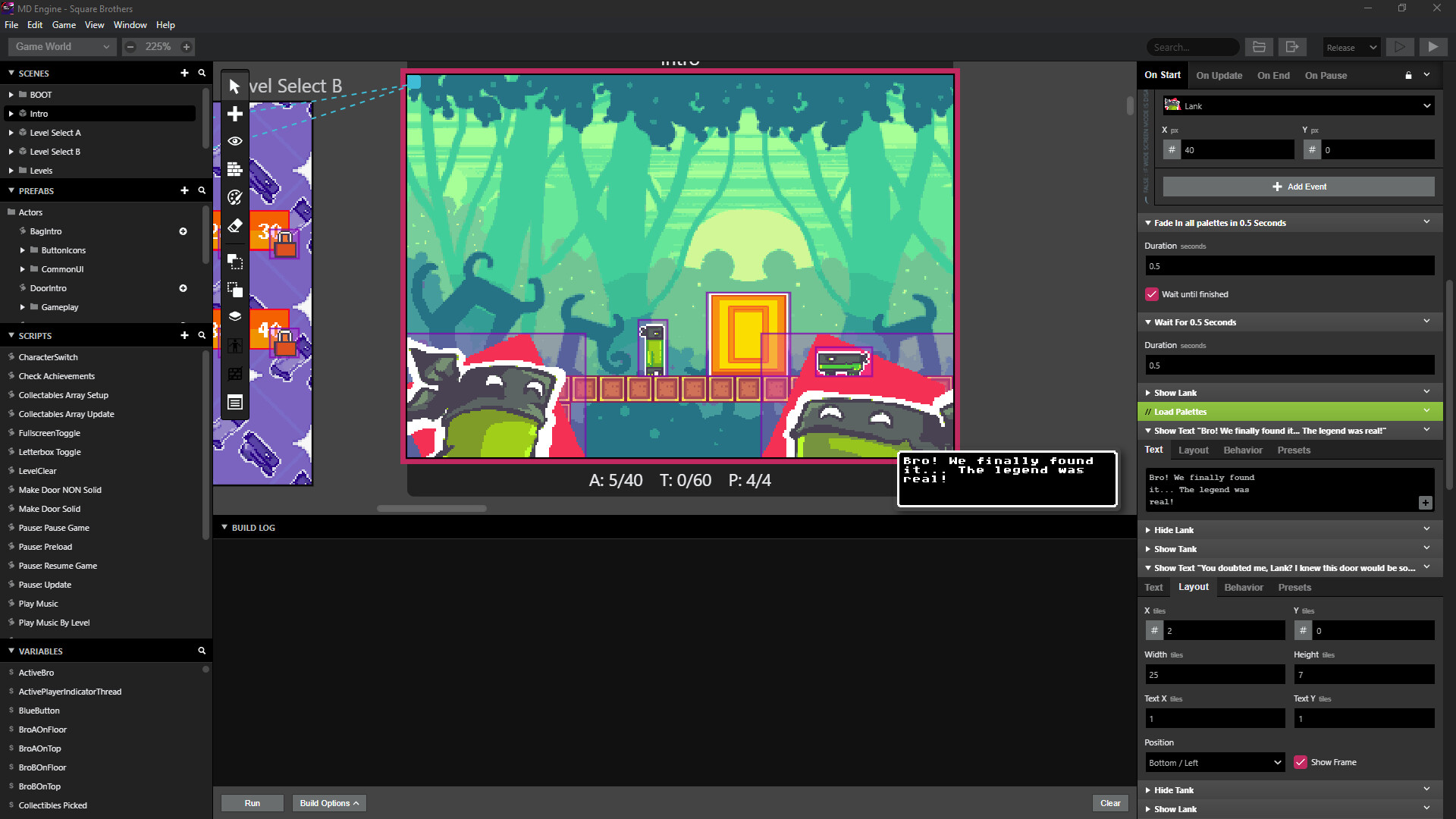
MD Engine is a new visual coding program made for easy development of games for Sega Genesis. A visual coding program, much like Game Maker or Clickteam Fusion, allows for the development of video games with an interface that allows for you to build a game with visual assets and menus without having to rely so much on writing code. With this, and a bit of patience and inspiration, you should be able to make your very own new Genesis games without having to write one line of code.
MD Engine was made as a fork of GB Studio, an open source visual coding program for making games for Nintendo’s Game Boy (Color) handheld. It uses much of the same interface and menus, so MD Engine should look familiar to anyone who has worked in GB Studio. However, MD Engine touts some extra special features that are not available even with GB Studio, such as exporting your game as a special PC or HTML5 game with extra features not possible on Genesis, such as a widescreen visual mode and CRT visual filters. Of course, if you just want to make a game ROM that can play on Genesis consoles or in Genesis emulators, you can do that as well.
Be sure to take a dive past the break to find out more about how MD Engine could help you make the Genesis game of your dreams.
After several months of writing, we’ve finished the 1.0 version of the MD Engine docs!
We’re reviewing the spelling + grammar and finishing the examples web versions!
You can check them here:
mdengine.dev/docs/(っ˘ω˘ς )
#sgdk #megadrive #mdengine #gamedev #indiedev
— Two Black Cats (@twoblackcats.jp) October 17, 2025 at 12:27 AM
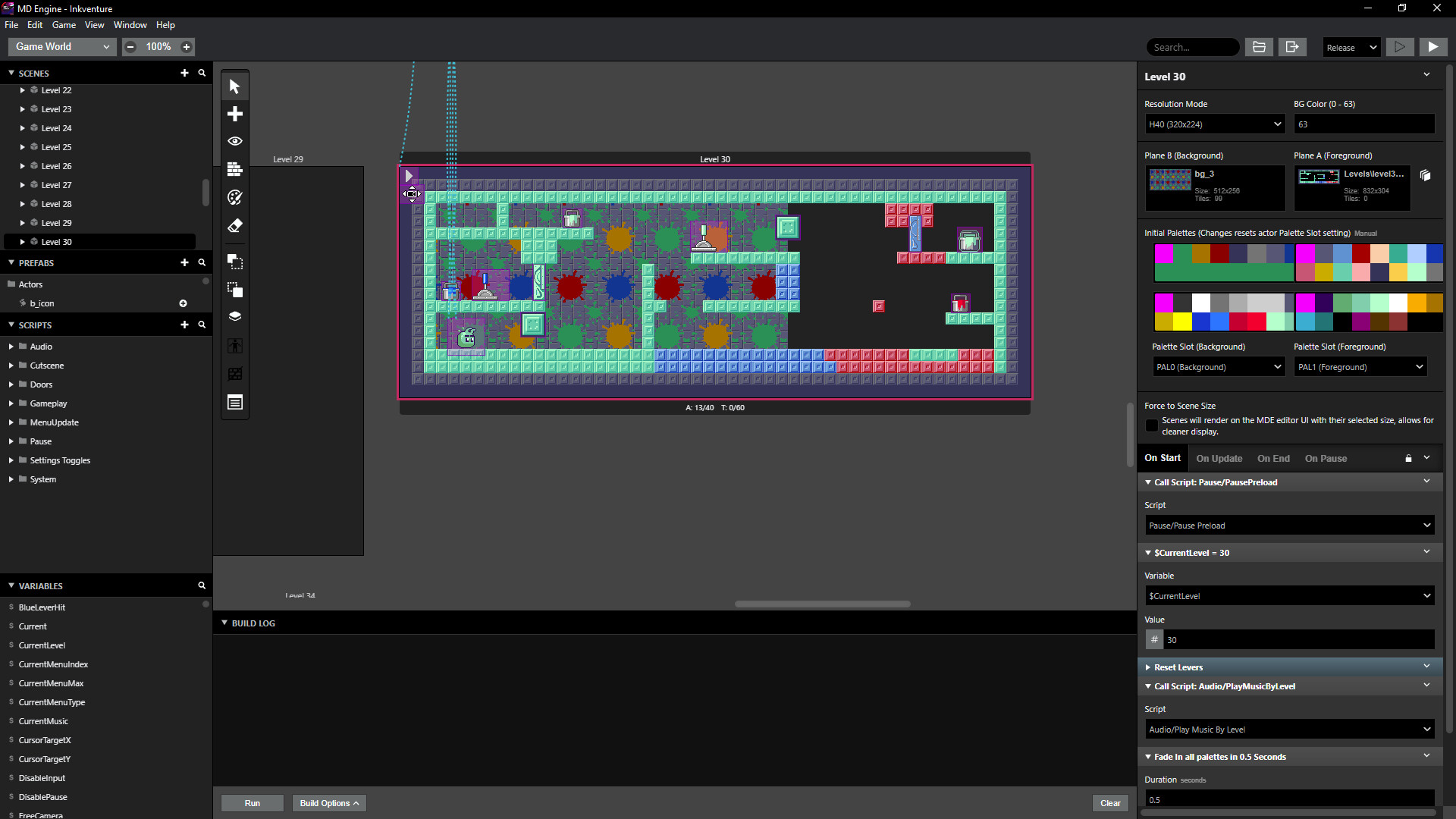
As a visual program, MD Engine can help those even with little to no coding experience to develop games to play on Genesis consoles. For those of you who are actually familiar with C-based programming, you’ll still be able to use that knowledge for some more advanced features. Otherwise, you’ll be free to put your game together with a variety of drag-and-drop solutions, including a map of different screens that can be accessed in-game and multiple menus to flesh out the behavior of certain “actors” in the game. It also allows you to convert sprite art or fonts to be usable in your game.
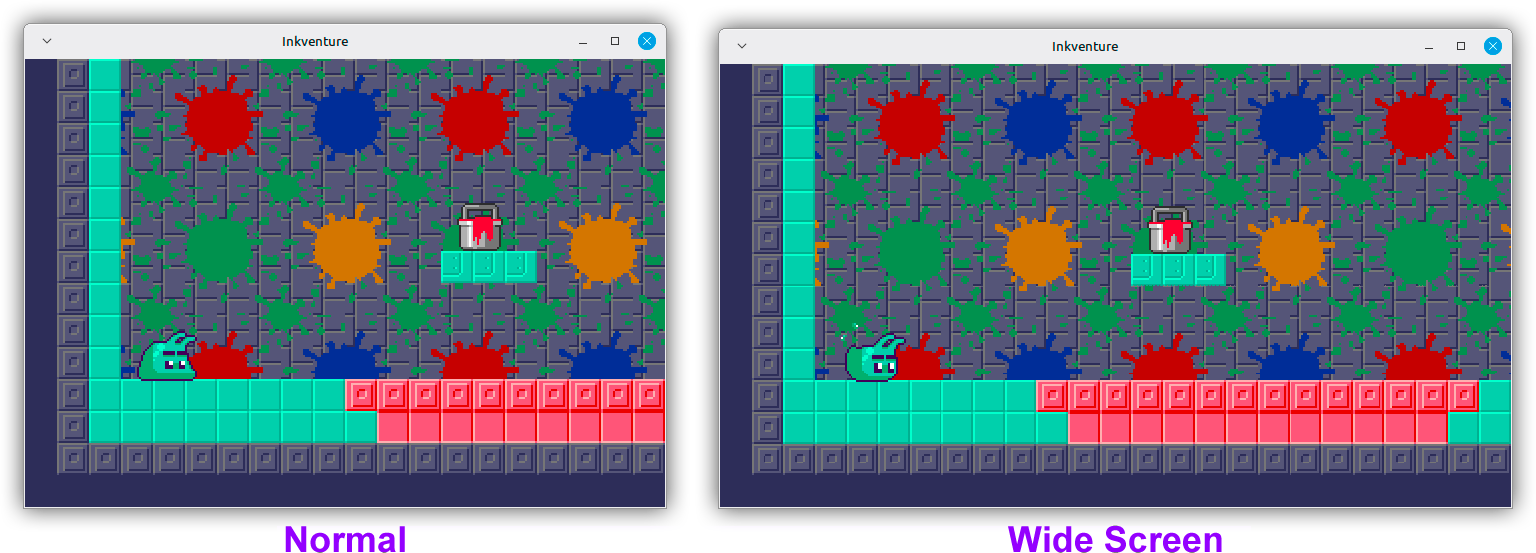
As stated earlier, you can export your finished game or demo as either a ROM to play on Genesis consoles or emulators, but also as a PC desktop game or HTML5 game. When you export as either, you can make the game run in widescreen, turn on built-in CRT visual filters, or eliminate sprite limits, allowing for as many sprites as you want to be displayed without slowdown or flickering. These features can all be activated at will by players. An HTML5 game will allow you to make the game playable on a website where it could function on a computer or mobile device’s web browser. I suspect many developers selling their game’s ROM on itch.io will likely use that to put a playable version of their game up on the itch.io page for people to play before they even download the game. (I could even put my own Genesis game up right here on SegaBits for you to play in this very page if I had one.)
What MD Engine won’t be able to do is allow you to make your own sprite art, music, or sound effects from within the program, although GB Studio didn’t allow for this either. I would recommend programs like Asperite, Resprite, or Dpaint.js for making pixel art. Tiled is also useful for making backgrounds. You can try DefleMask or Furnace to make music.
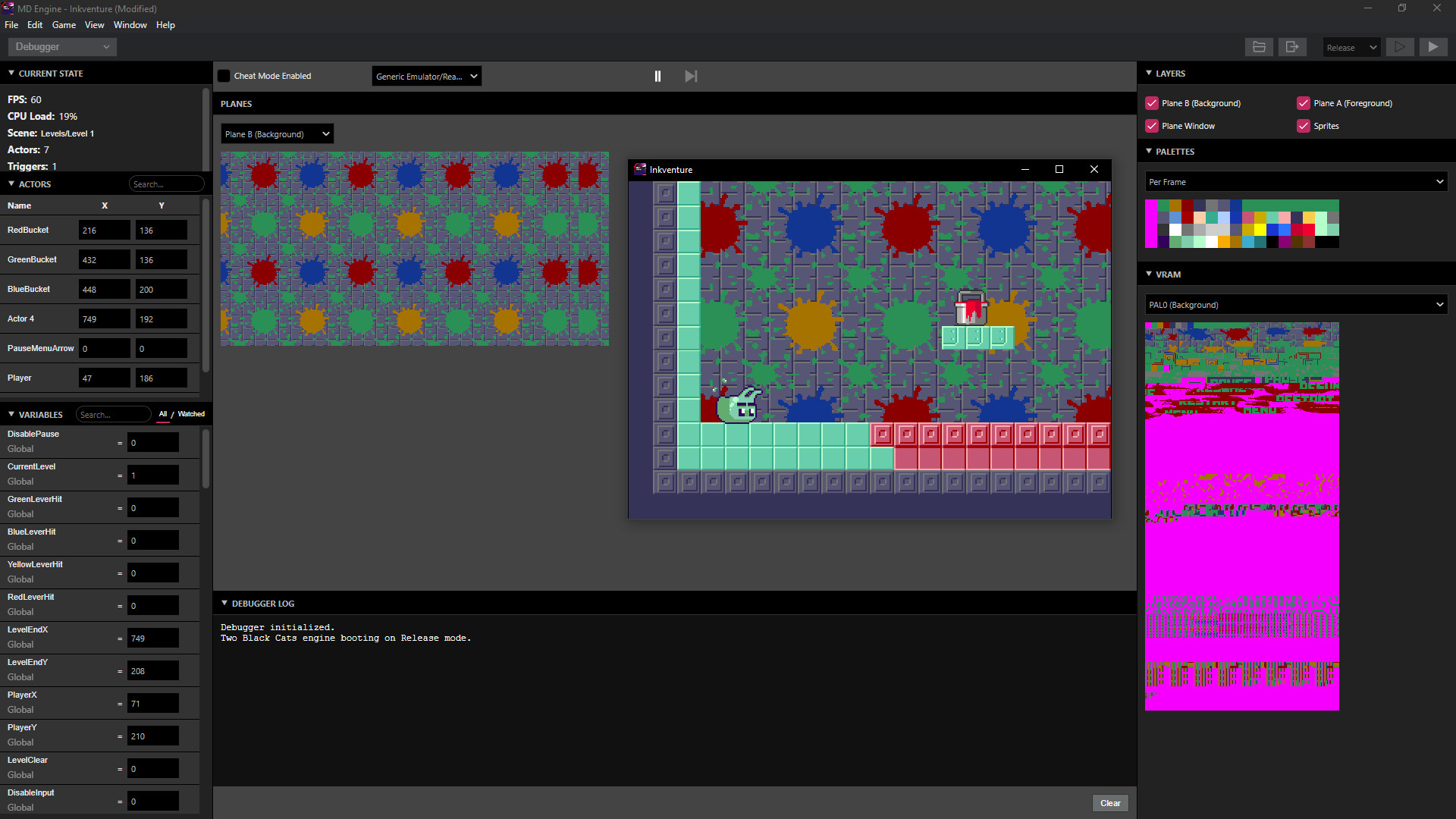
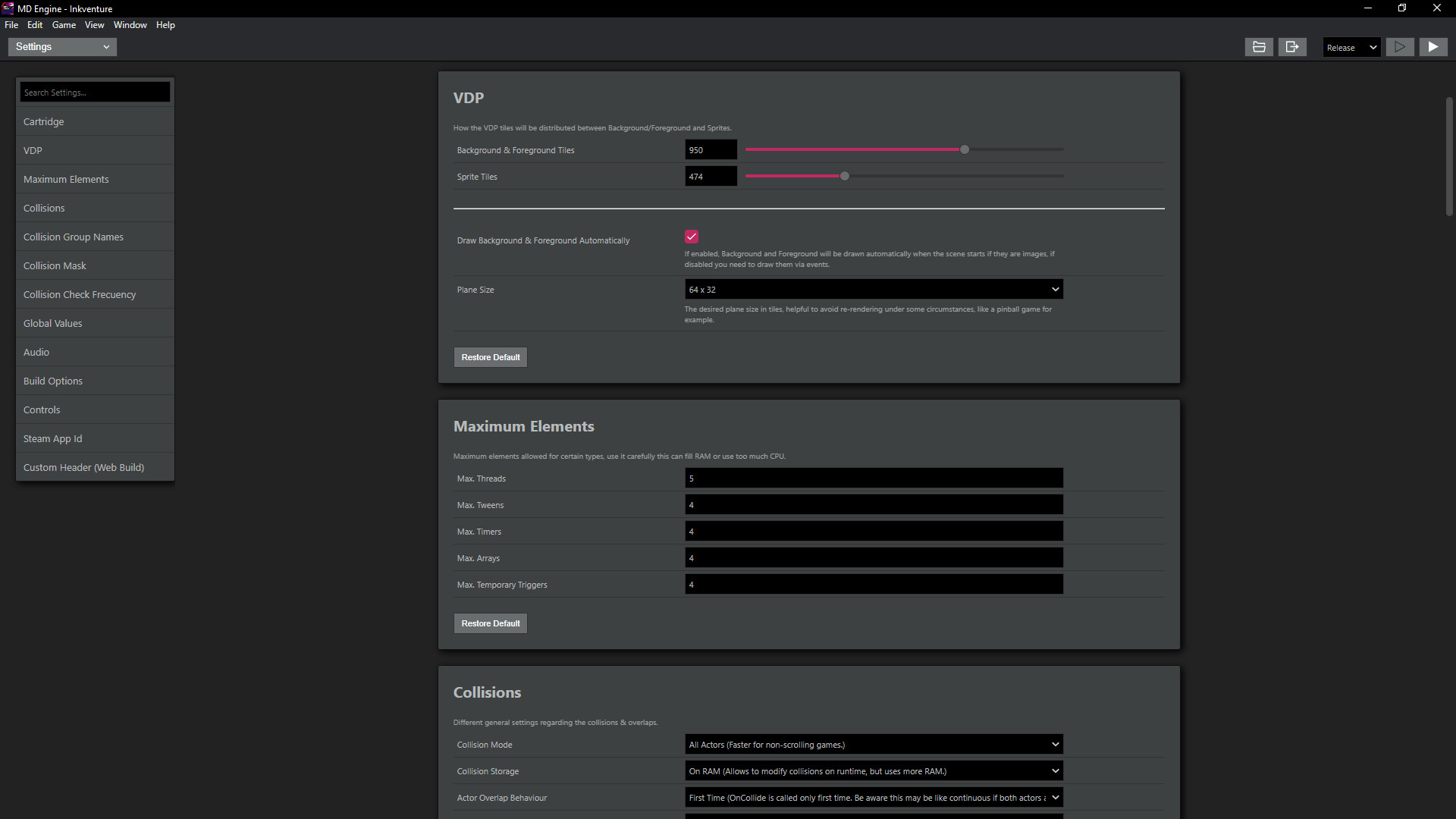
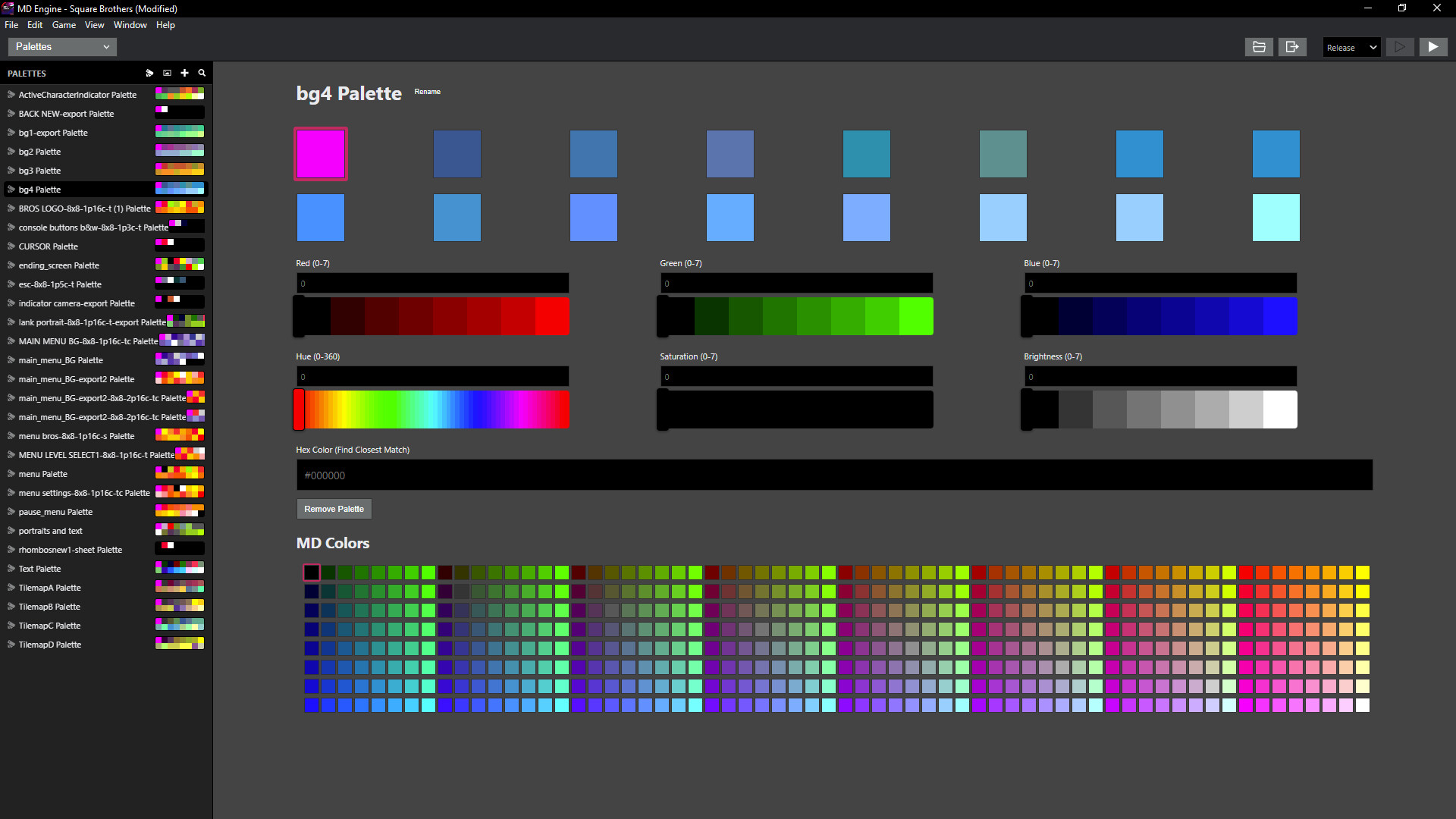
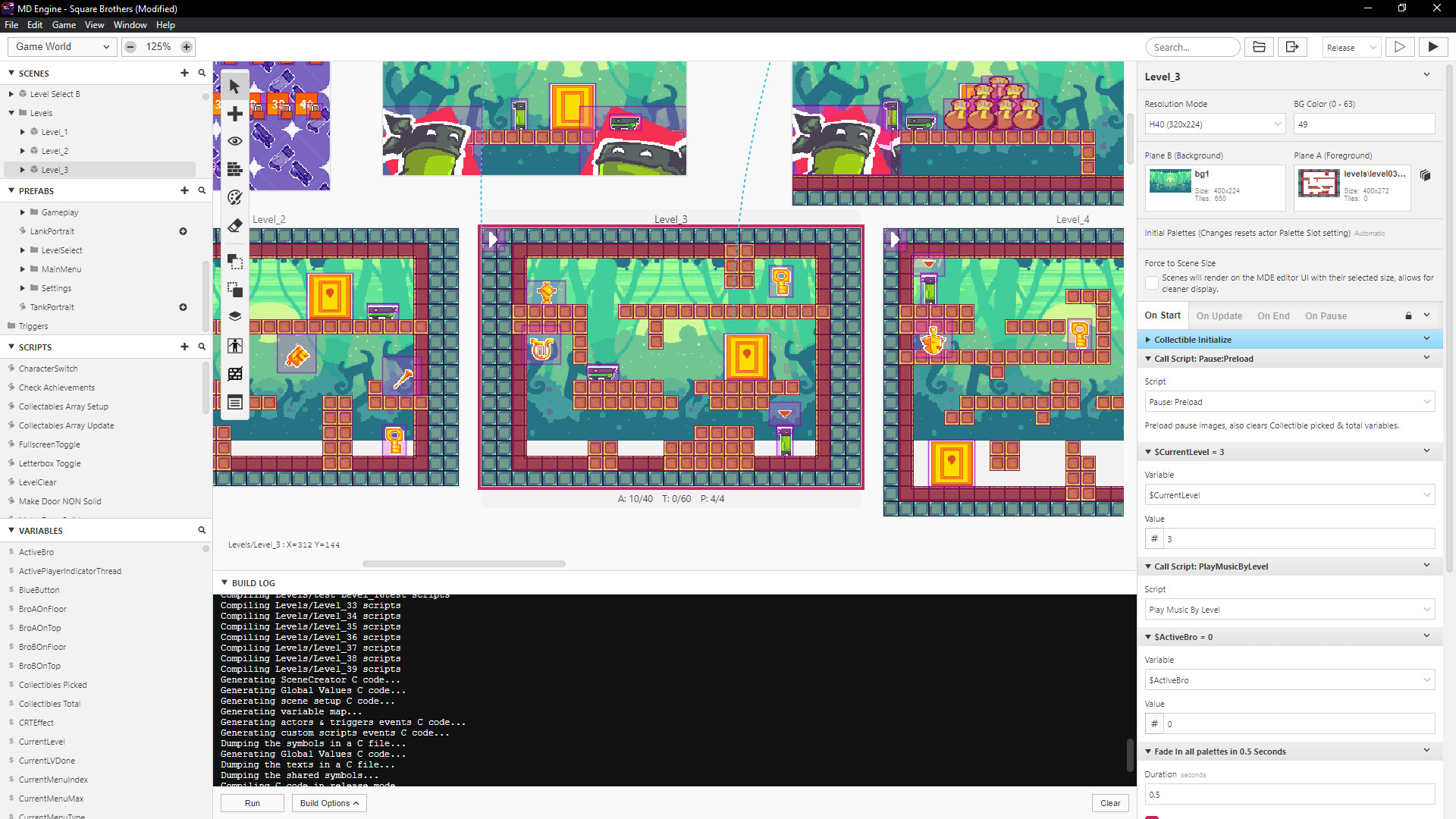
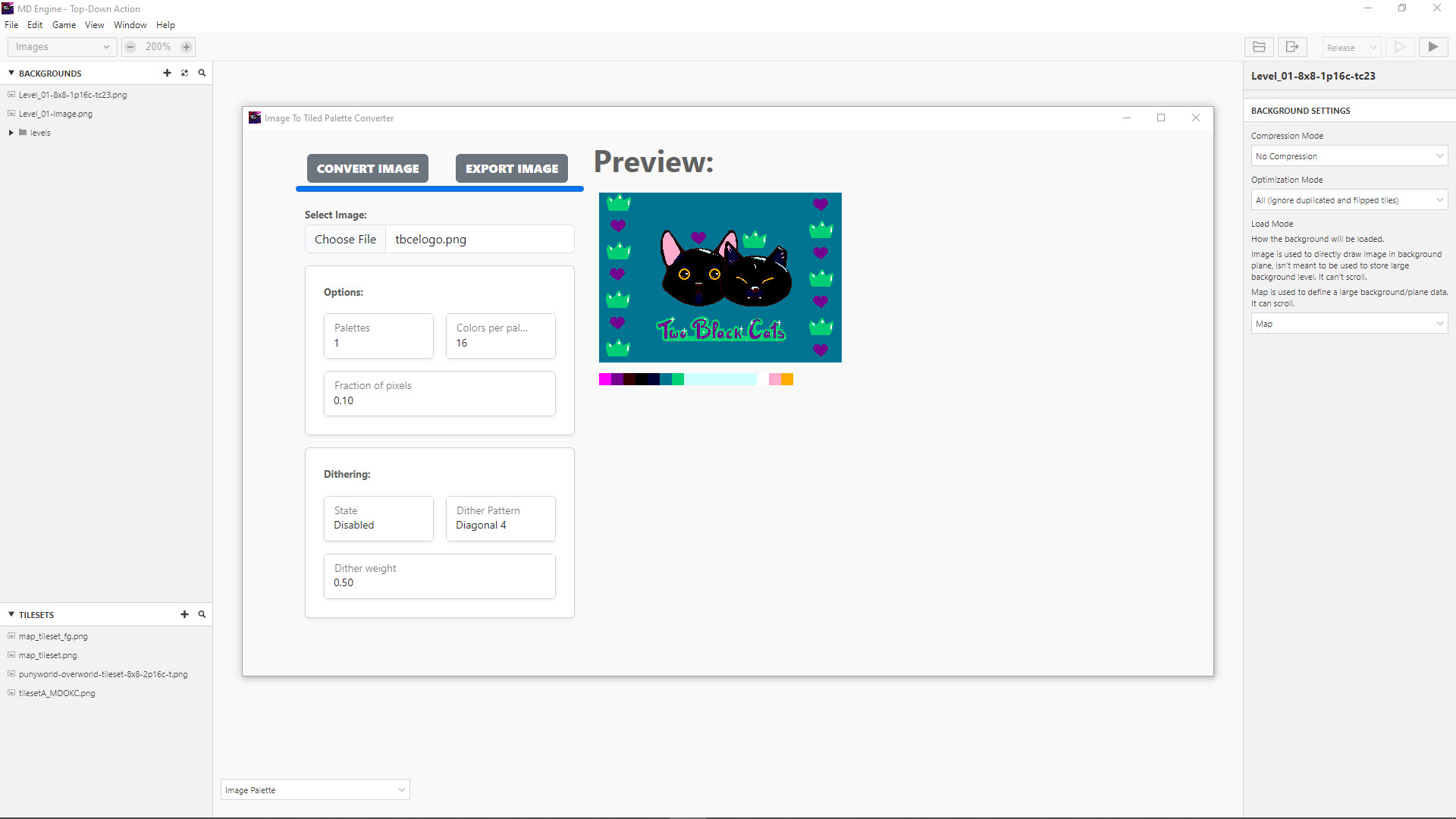
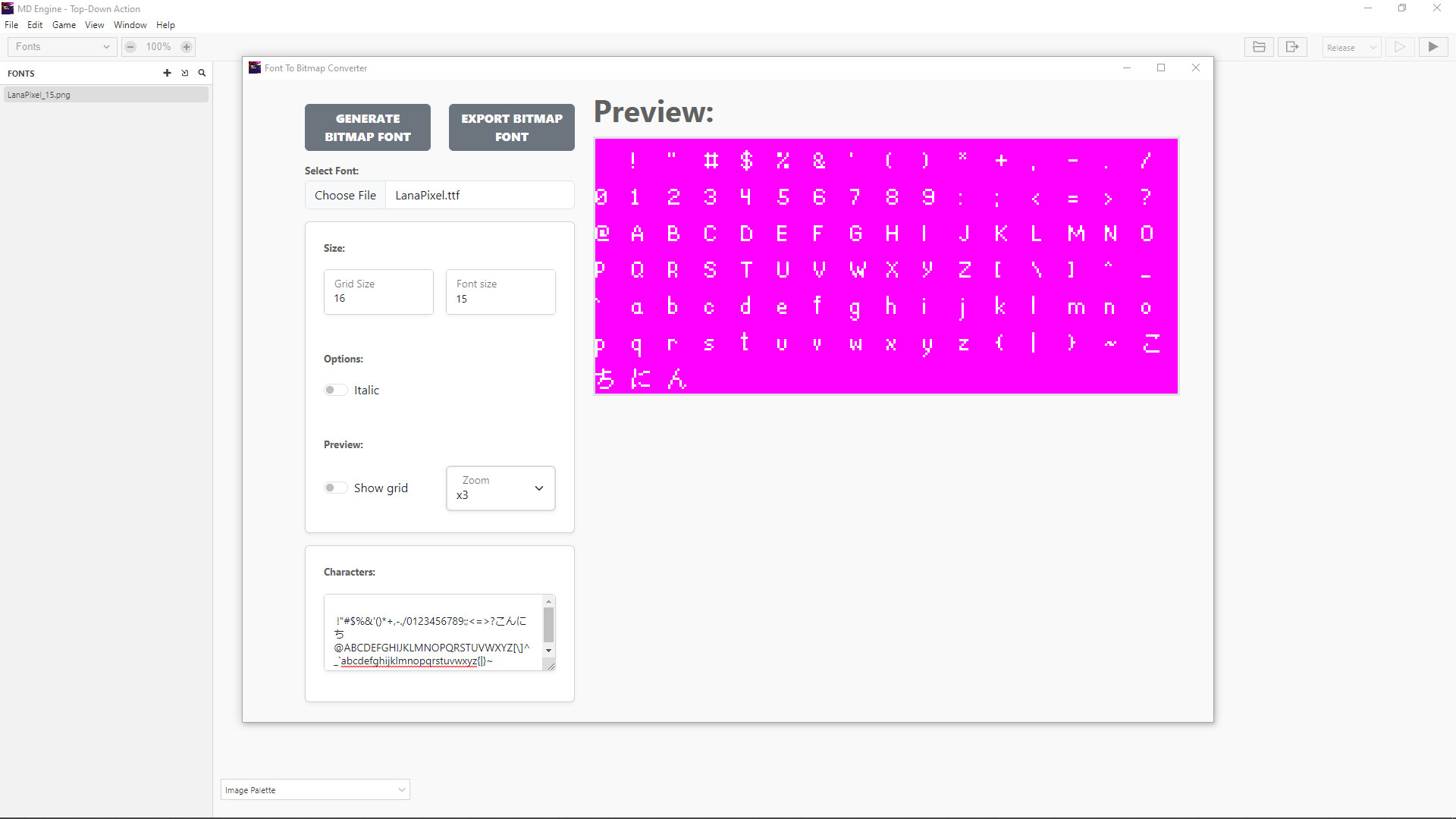
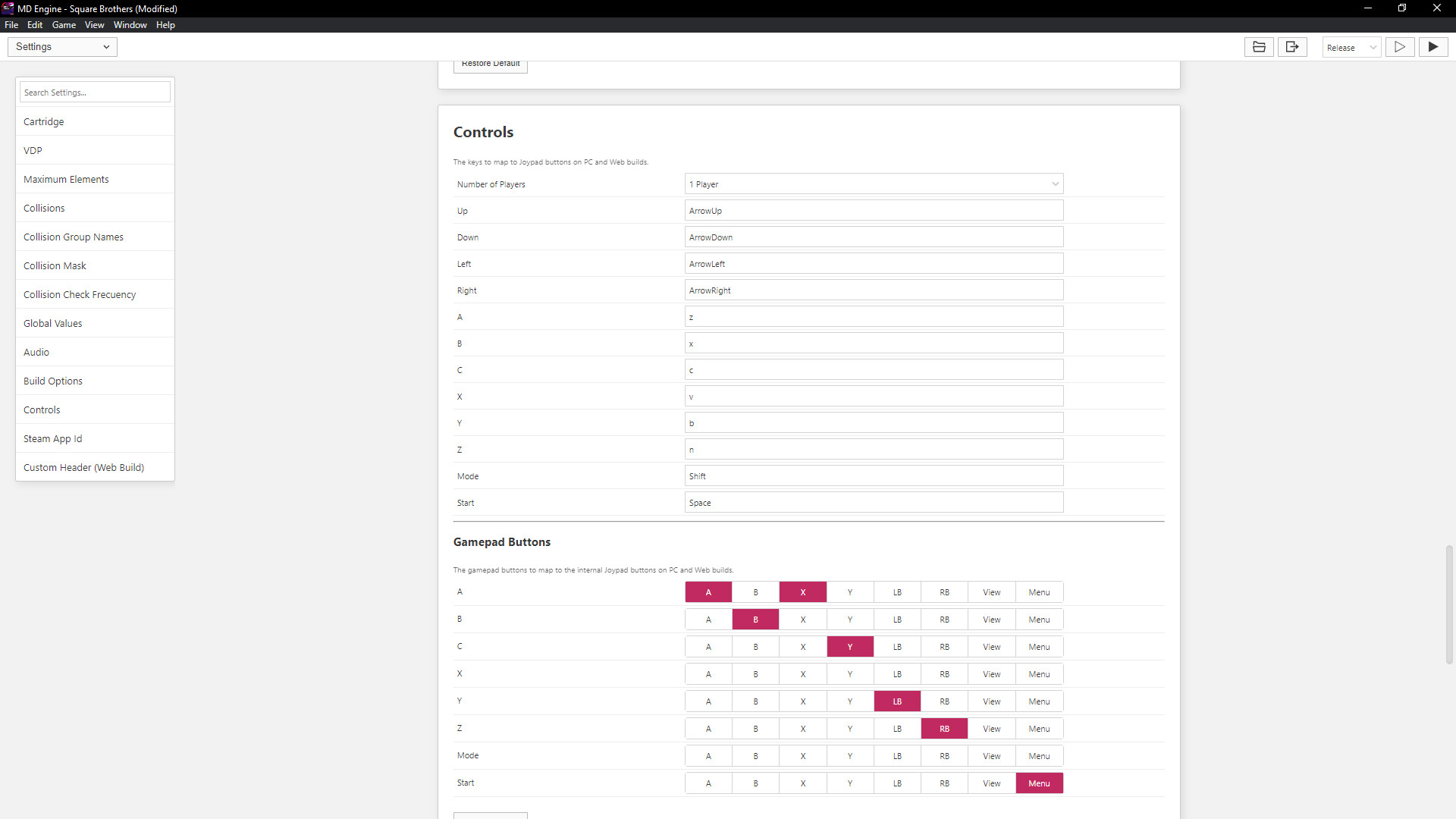
As of this writing, MD Engine is not yet available to download, but it is already available to view on Steam, where it can soon be downloaded for Windows and Linux computers. A beta version is planned to release in the coming months, however. Until it’s ready, you can wishlist the software from the Steam page to help Two Black Cats get some exposure on Steam after it’s out and to keep tabs on when you can download it. A Mac version is also being considered if MD Engine proves itself to be popular enough to invest in testing for Apple Silicone-based Mac hardware. If you just can’t wait to take MD Engine for a spin, you can read up on documentation for the program on the MD Engine webpage or check out some tutorial videos on Two Black Cats’s YouTube page.
As an added bonus, Two Black Cats noted in their FAQ page that while MD Engine does not allow for development of Sega CD or 32X games, they may consider adding in such functionality if MD Engine proves to be popular. Otherwise, they recommend anyone with the knowhow take the source code from the game they’ve built and edit it to get the game running on either add-on. They also hint that they may be working on “engines” for other consoles. I’m sure a visual coding program for Master System and Game Gear would be quite exciting for Sega fans, so lets hope that’s in the pipeline.
Are you intrigued by the advent of MD Engine? Do you plan on making any games with it? Were you waiting for a visual coding program to come and give you the chance to make your dream Genesis game? Let us know in the comments below.
And if you are making a game for any Sega platform or inspired by a Sega game, regardless of what program you’re making it with, drop us a line and we may write about it.
Related posts:
 Hunter Girls kickstarter campaign cancelled, refunds issued, and game cartridges now on sale at PSCD Games website
 A new Genesis/Mega-Drive shmup, ZPF, begins crowdfunding on Kickstarter; already achieves its goal nearly 5x over
 New Genesis/Mega-Drive shooter ZPF now available for pre-order
 Sega 8-bit game publisher 2Minds opens pre-orders for Game Gear adventure “The Sword of Stone” + new Mark III and Genesis/Mega-Drive games
 Rocket Panda now available to purchase on Genesis/Mega-Drive cartridge
This is awesome! As somebody that is a visual learner and pretty much dyslexic, visual coding like Unreal’s blueprints have been amazing. Without it, I don’t think I would have been able to make games at all. A dream of mine has been to make a game for the Sega Genesis and with this it might be possible for me!
Nice. I’ve been interested in trying to make a Genesis game myself, but I can’t program my way out of a paper bag.
Good luck with your own game. When you get far with that, drop us a line here and I may talk about it if I still write for SegaBits by then.
Oh cool thank you. My game is very much inspired by retro games I grew up with (sonic adventure, ristar and mystical ninja staring goemon).
It’ll be pretty interesting to see a 16-bit game based on 3D games like Sonic Adventure and Mystical Ninja, but more power to you. Best of luck.
Hi Nico do you know of any other Visual programming tools? Also a dyslexic who has struggled with traditional coding.