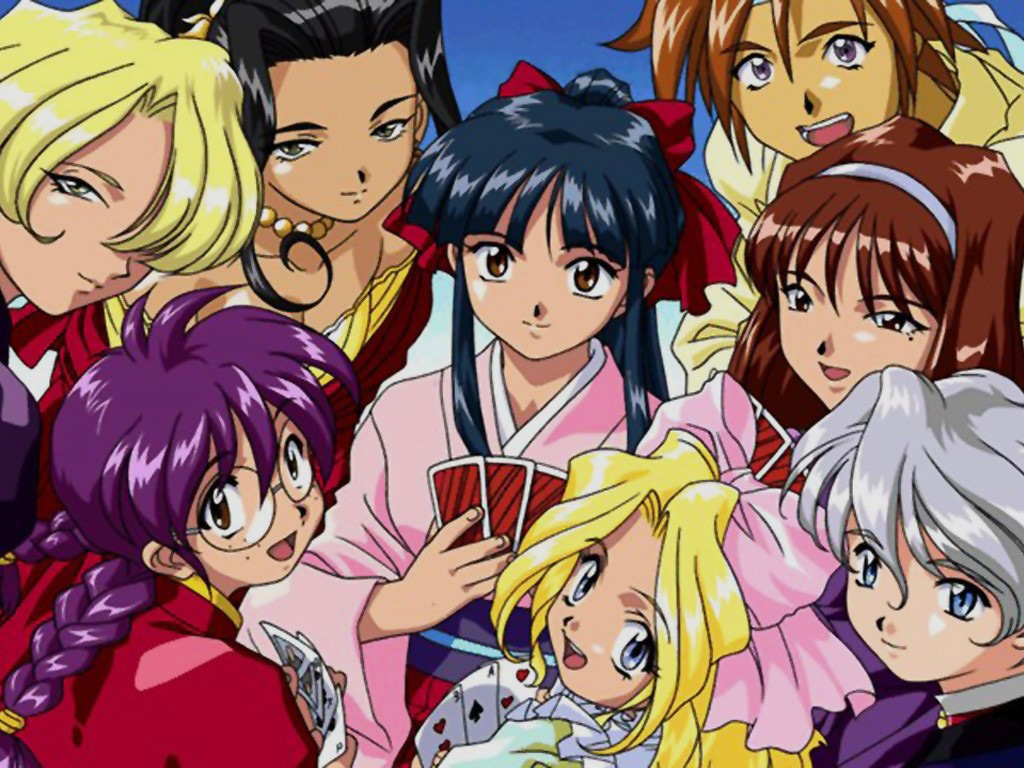
SEGA Retrospective: Sakura Taisen Week – Imperial Assault Force, Move Out!

STweek

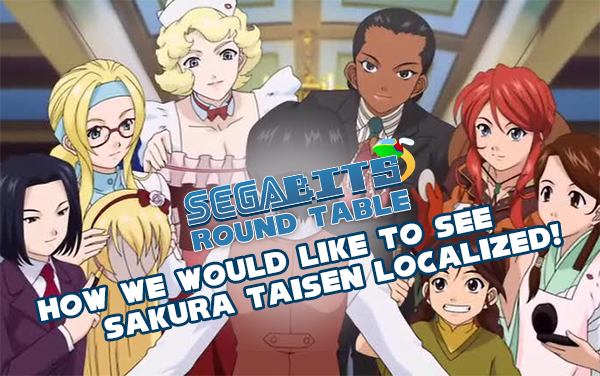
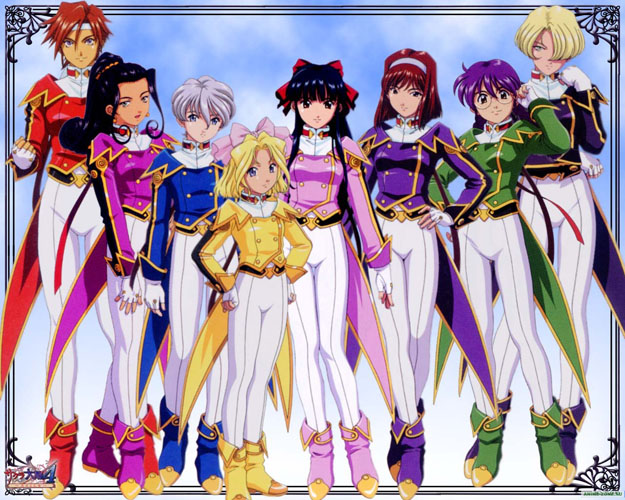
Konnichiwa! Kori-Maru here to welcome our readers to Sakura Taisen week.

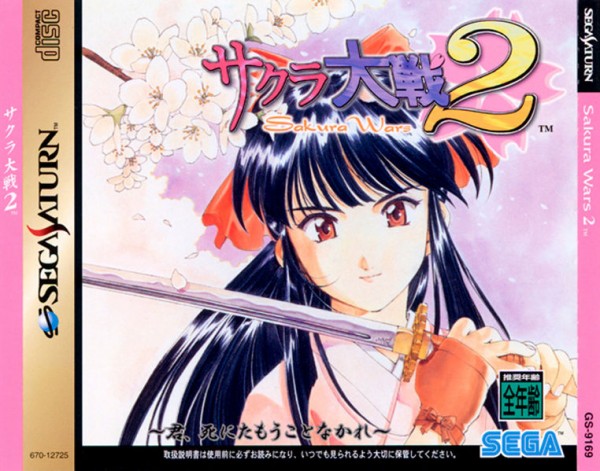
In commemoration of Valentine’s Day we’ll be providing you with a full week of coverage for SEGA’s popular dating/strategy game. Since its release in Japan on the SEGA Saturn back in 1996, the franchise expanded with sequels, spinoffs, stage shows, animation, and even a motion picture. While Sakura Taisen was a smash hit in Japan, the franchise was never given much exposure in the west due to SEGA’s western branches not believing the series would find an audience.

Luckily, other companies disagreed, and Sakura Taisen’s anime and manga would reach western shores in the early 2000s thanks to companies like ADV films and Tokyopop. Thanks to NIS America, even Sakura Taisen’s latest game, Sakura Wars: So Long, My Love, was able to make reach western markets. Most recently, last year’s Project X Zone for the Nintendo 3DS saw a Western release and featured Sakura Taisen characters and locations.

To get you guys prepped for a week of Sakura Taisen, check below for an overview of the series!

Classic SEGA Ads: Did you know SEGA Master System is the best thing ever?

Watching Master System commercials from places like the UK and Australia sometimes feels like watching something from an alternate dimension, one where the NES didn’t obliterate its competition and establish an unbreakable monopoly on the 8-bit gaming market. That’s because despite the NES’s utter dominance of the US and Japanese gaming markets, Nintendo failed to establish much of a foothold in Europe or Brazil, where SEGA dominated. Thus, we have ads like this, that act like the Master System was on top of the world. Mostly because it was…in Australia anyway.

The ad itself is pretty typical for its time, lacking the flare and attitude that would eventually become characteristic of SEGA’s marketing in the nineties. It does give us a nice window into the Australia’s 1980s games market. The After Burner music in the second half is a nice touch, too.

My Life with SEGA reviews the AtGames Genesis Console


For many SEGA fans, the Genesis was their first SEGA console. In North America, it was easily the most successful system released by the then 49-year old company. Sonic the Hedgehog made his debut on the 16-bit juggernaut, followed by a string of classics, such as Streets of Rage, ToeJam & Earl, Comix Zone and Vectorman…. just to name a few.

Now, 25 years later, the Genesis is now a cherished memory of our gaming history. Many of its games have ported to several current-generation gaming consoles, like the PS3, Xbox 360 and Nintendo Wii. In addition, there have been countless “cloned” Genesis consoles from RetroGen and AtGames. These are typically cheaply made, easy on the wallet, come with several built-in classic games and they’re fuckin’ EVERYWHERE! I’m not even kidding. I’ve found them book stores as well as Bed, Bath & Beyond. In fact, that’s where I purchased mine. Now, why would I buy one of these things? I have a CDX and a Model 1 Genesis. I certainly don’t NEED another Genesis. Why blow another $40 on something that undoubtedly wind up collecting dust in my closet? It’s simple, watch the video.

Like this video? Subscribe to the SEGAbits YouTube channel!

Editorial: Sonic Lost Identity? Why Sonic should branch out, but why he should remain true to himself

segabits sonic lost world editoial

There’s little doubt that Sonic has, against all odds, cemented his place in the gaming landscape.

There was a time, and it was a time that I’m sure many reading this will remember, when Sonic existed exclusively on SEGA platforms. He was the face of the company: the representation of an edgier and more daring console competitor, and, in many ways, the total opposite of his rival, the mascot representing those other systems.

With SEGA’s exit from the hardware business, it was only a matter of time before this would all shift. Sonic Adventure 2, a game developed without any intention of ever being released on a Nintendo platform, was nevertheless met with incredibly warm reception among the Nintendo fanbase when it debuted on the Gamecube roughly eight months after its Dreamcast release. And rather then fading away like many mascots of old, Sonic was, in a sense, reborn to an entirely new audience.

It’s sometimes easy to worry about Sonic remaining true to himself, especially as he and his games have taken on several incredibly different forms over the years since. With the latest rumor that we’ll have a new Sonic game next year, I think it makes sense to look ahead at where we all think the hedgehog should be going. I’m definitely excited to see what plans SEGA has for the blue blur; it’s my hope that Sonic can continue to evolve and change while at the same time never leaving behind the essence of what defined him all those years ago.

Classic SEGA Ads: Yes, every SEGA CD can change into a woman

I’d like to introduce all of you SEGAbits’ latest feature: SEGA Saturday Morning Ads. This feature will take a look back at SEGA’s advertisements, their admen and their context in SEGA’s history. Today, we take a look at one of the most intense infomercials I’ve ever seen: SEGA Europe’s Mega Drive/Mega CD infomercial from 1993, released via VHS in the UK just as the MEGA CD was finally making its way across the Atlantic.

I first saw this infomercial back in 2002 when I was researching the SEGA CD and considering a purchase. The moment I downloaded and watched this commercial…I knew I had to have a SEGA CD. It just looked so awesome! I had no idea what the hell Make My Video was or how the hell it was a game, but I just wanted to play it immediately!

Of course, most of the SEGA CD games in this commercial ranged from barely mediocre to utter trash, but the fact that it got this reaction from me in 2002 should speak volumes of this infomercial’s sheer quality, from its sound, to its script, to its cinematography. Making someone lust for ten year old hardware and terrible FMV games? That is a quality piece of advertisement my friend. Unfortunately good ads aren’t always enough, and in the case of the SEGA CD, they weren’t enough to get more then 60,000 UK consumers to buy the peripheral at its £269.99 price tag.

Sit back, turn up your speakers and play this ad on full screen. Just be forewarned: you will want a SEGA CD after this.

Swingin’ Report Show #54: SEGA Retro Talk with GameSpot editor Peter Brown


The SEGAbits Swingin’ Report Show is back for 2014, and boy do we have a good show for you!

SEGAbits editor/writer Barry the Nomad and SEGAbits writer, Sonic Talk host, and Sonic Stadium writer Jason aka Shigs are joined by GameSpot editor Peter Brown for a retro themed round table discussion. Peter shares how he got into video game journalism and gives us his thoughts on the Xbox One’s Panzer Dragoon spiritual successor Crimson Dragonwhich he officially reviewed for GameSpot. We also discuss the many SEGA consoles celebrating anniversaries this year and share some good ol’ SEGA memories. Listen today, and while you’re at it subscribe to us and rate us on iTunes!

[Download] [RSS] [iTunes] [Archive]

Round Table: How we would like to see Ristar brought into the modern era

roundtableristar
 
Ristar week has been a blast, but it ain’t over until we throw a round table! This week, our writers answer the question: “How would you like to see Ristar brought into the modern era?” Despite Ristar’s short lifespan in the 90’s, the character’s popularity has endured, as evidenced by our full week of Ristar coverage and Ristar’s inclusion as a cameo in Sonic & SEGA All-Stars Racing and his second cameo as the flagman for Sonic & All-Stars Racing Transformed. But cameos are not enough for SEGA’s star headed platformer, we think he deserves more.

Read on to see how we would like to see Ristar brought into the modern era!

The SEGA Five: Ristar’s Coolest Bosses

w5ristar
 
Ristar has some of the most spectacular and varied bosses I’ve ever experienced in a sidescrolling platformer. Though they aren’t all hits (such as Scorch’s somewhat irritating Simon Say’s sub boss) the five bosses below will remain some of the most memorable experiences I’ve had on the Genesis (and Game Gear), Ristar’s rogues gallery has some star players that are worth highlighting. I’d like to note that I purposefully left out the final bosses of the games, partially to avoid spoiling people who haven’t beaten these cult classics, and to highlight some more varied experiences from the games.

Some of these bosses never received official names. This article will be referencing the names used in Ristar Star Cluster for this article.

Retro Review: Ristar the Shooting Star

 Ristar title copy

SEGA’s catalog is quite literally littered with spectacular characters and franchises that either never took off or never made it to the west. We each have our favorites and one of mine is a little game for the Genesis called Ristar, a glowing example of SEGA’s mascot aspirations that was unfortunately unable to find an audience.

Back in the early Genesis days, SEGA was looking for their Mario killer. After Alex Kidd failed to save the Master System from being anything more than a speed bump to the NES’s growing monopoly, SEGA knew it needed a mascot that could capture the imagination (and money) of gamers. As we all know, they would eventually come up with Sonic the Hedgehog. Along the way, however, they created some other concepts, including a bunny that could throw things at enemies. This concept would percolate within SEGA for years, until it was finally released in 1995 as Ristar.

Petition to bring SEGA’s Japanese titles to PC!

SEGATweet

Following the response from SEGA in the above picture, GAF member TaroYamada (With the help of GAF member Grief.exe) has just started a petition to bring over SEGA’s Japanese output onto PC. The three initial titles suggested, Virtua Fighter 5: Final Showdown, Vanquish and Bayonetta, should be stressed are only part of a grander scheme. The true purpose of the petition is to adjust SEGA Japan’s perception of PC as a platform so that future Japanese made SEGA titles may also get a shot of appearing on PC. The mission statement of the petitions follows as such;

It’s targeting games that are a perceived lower risk, please note that even if you disagree with the initial suggestions a massive part of this effort is about adjusting SEGA’s perceptions of what the PC market is open to concerning their content.

My Life with SEGA kills some time on the SEGA Genesis with “Time Killers”

Introduction by A.J. Rosa: When Strata’s weapon-based fighter Time Killers hit arcades in 1992, my brother and I soon monopolized the cabinet. It was funny, violent, gory and ridiculously entertaining. Being SEGA boys, we were itchin’ to see this bloody whore ported to the Genesis, or even better, the SEGA CD. Hey, that was our new toy, and we thought it was AWESOME!

By the time it landed on our favorite 16-bit hero, 4 years had passed. SEGA Saturn, Sony’s PlayStation and the Nintendo 64 were already duking it out. On top of that, Time Killers had been surpassed by other fighters. Unlike its contemporaries, such as Street Fighter and Mortal Kombat, it didn’t receive an annual sequel to keep the franchise alive.

So, was this port worth the wait? Lauren and I will share our feelings with you as we try to hack each other into pieces. Like this video? Subscribe to the SEGAbits YouTube channel!

Art of SEGA: Ristar the Shooting Star

artofsegaristar
 
All Sonic fans are familiar with the work of Yuji Uekawa. He has been the franchise’s primary character designer for nearly two decades now, taking the reigns in 1996 with Sonic 3D Blast. He’s most notable for completely redesigning Sonic and his friends for the new millennium in Sonic Adventure, and has played a pivotal role in the character design of most Sonic and Sonic Team titles since then.

Before Sonic though, Uekawa had Ristar. He was Ristar’s lead character designer, designing all of the characters in the game including Ristar himself. Unfortunately, there is no art book for Ristar, so we had to rip the designs straight from the Japanese version of the manual, which is filled with beautiful illustrations of Ristar and other characters, as well as a few nice instructional comics and backgrounds. We’ll also be including the sprite artwork from the credits.

The character artwork was taken from SEGA Retro’s Ristar manual scans. The sprite artwork was ripped by Dr. Schnaps. The various bits of trivia and character information can be sourced to Ristar Cluster. Enjoy!

SEGA Tunes: Ristar’s Du-Di-Da!!


Planet Sonata is probably my favorite stage in Ristar. The first stage has you carrying metronomes to song birds and gradually activating the instruments for the stage’s background music. It all culminates in the stage’s boss fight, which attacks you to the rhythm of this theme! Planet Sonata is a perfect example of what makes Ristar special: it’s creative, unique, and introduces gimmicks and elements that are then discarded for the rest of the game in favor of other gimmicks.

If the early stages of Ristar don’t grab you, I would encourage you to at least try to stick around until Planet Sonata

SEGAbits Gaming Community NiGHTS featuring Streets of Rage Collection

IMG_3043776042139

Join us in our next gaming community night with SEGA’s beat’em-up classic, SEGA Vintage Collection: Streets of Rage, this Wednesday night on Xbox Live Arcade. We will be playing through all three games from 7:00pm EST to 11:00pm EST on January 22nd.  Just add “KoriSX15” to your friends list and we’ll be sure to add everyone to the Xbox Live Party to begin the session. Hit the jump for the game schedules.