Not all games can be winners, we know that. But even though this year was light on SEGA releases, none of the games released were terrible. Now the SEGAbits staff sits and nitpicks what title was the most disappointing for them this year. Trust us, it was harder to pick a disappointing game then it was to pick a favorite!
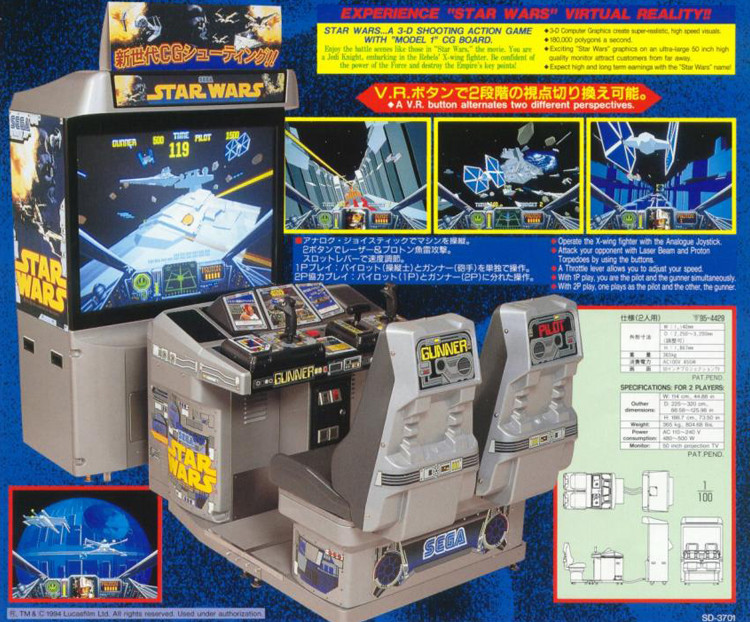
While the heyday of the original Star Wars trilogy video games in the 70s and 80s belonged to Atari, during the 90s and early 2000s our favorite arcade game maker (that’s SEGA, if you’re wondering) internally developed a three games that blew the Atari arcade experiences out of the water. The arcade games I am referring to are Star Wars Arcade (by SEGA AM3 and LucasArts), Star Wars Trilogy Arcade (by SEGA AM8 and LucasArts), and Star Wars Racer Arcade (by Sega Rosso). These games were exciting for a number of reasons. For starters, you had some of the best SEGA arcade talent behind the titles working with some of the best arcade technology of the time. [Learn more about SEGA’s arcade development in the 90s]
I know old Atari arcade games have their charm, but when you’re dealing with a franchise like Star Wars that leans so much on visuals, sound and music I’d much prefer to know what I’m looking at rather than trying to figure out what tiny wireframes are trying to convey. Personally I found Star Wars Racer Arcade to be the pinnacle of Star Wars arcade experiences, as it felt 1:1 to the film in every aspect. But today, for the latest entry in our SEGA Tunes series, I wanted to look back at the Star Wars arcade experience that kicked off the SEGA trilogy of arcade games, the aptly named Star Wars Arcade.
Back for our end of the year discussion on what SEGA game was our favorite this year. Over all, it was a weak year for the diversity of games coming from SEGA, as they are rebuilding, but they did have some gems that we shall be talking about. Let us know what your favorite SEGA (or even Atlus) game of the has been for 2015 in the comments below.
If you enjoyed the video make sure to like it, share it and subscribe to our channel. We appreciate your support!
2015 sure has been a great year for indie SEGA Dreamcast games! We’ve seen shmups, odd puzzlers, vikings, and now we’re seeing an RPG by the name of Pier Solar and the Great Architects. While Pier Solar released way back in 2010 to the SEGA Genesis/Mega Drive, the recent Dreamcast port features improved graphics, new scenarios, and special extras that take advantage of the Dreamcast’s unique capabilities (VMU mini-games!). As seen in my recent unboxing, the game’s packaging is beautiful. Now, in this latest episode of SEGA News Bits, I talk with George about my first impressions of the game.
The long awaited Dreamcast release of Pier Solar has started to arrive in mailboxes, and I was so impressed with the packaging that I knew it had to get the unboxing video treatment. This isn’t the first SEGA console the game has released to, back in 2010 the game hit the Mega Drive/Genesis and I shared an unboxing of the reprint edition. The Dreamcast version I present to you today is a first edition in the Japanese style packaging, other versions include US and PAL, but seeing as how most indie Dreamcast releases emulate the Japanese packaging, I went with this style and don’t regret it in the slightest. A lot of effort went into this release, and it really makes modern game unboxings look like crap by comparison. Seriously, who wants to see somebody opening a Wii U game where all you get is a disc and a slip of paper telling you to read the digital manual.
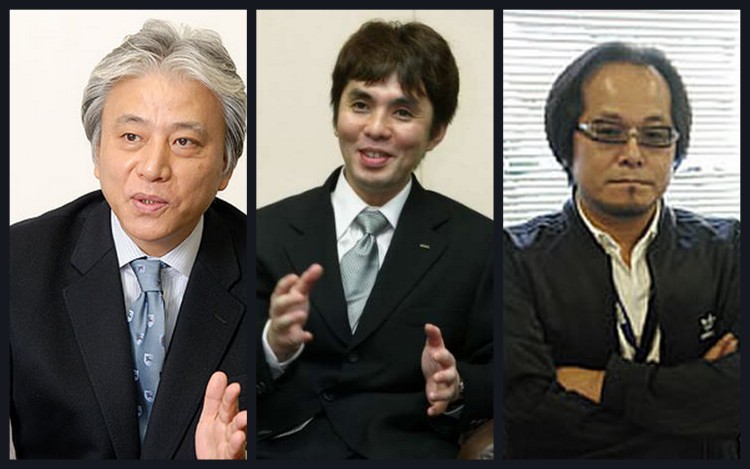
The executive team, Hideki Okamura (Left), Hisao Oguchi (Middle) and Takayuki Kawagoe (Right).
In 2005, Sega was back in the black in all areas for the first time in a long time. The Sega Sammy structure was completed, and the next generation home consoles were ahead. Like in the formation of twelve new R&D studios in 1998, executive management had a reset. Long time executives Hideki Sato and Hisashi Suzuki retired from Sega, after their thirty – or even in Suzuki’s case – forty years of service.
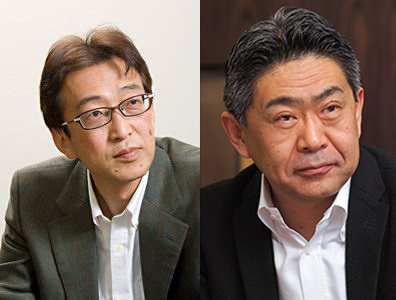
Masano Maeda & Naoya Tsurumi
As mentioned in Part 3, Hisao Oguchi would atain the highest executive position which he held until 2008 where he received even wider responsibilities as Chief Creative Officer of Sega Sammy.
Then there is Masano Maeda, who joined in 1991. Madea was responsible for building a new Western management team that made crucial partnerships and buyouts of Western companies, like Creative Assembly, Sports Interactive and Secret Level On a side note: the amount of games developed for Xbox 360 amount to roughly forty games, and on PC to about sixty games. On the Dreamcast, the amount comes to fourteen, and old PC releases amount to sixteen.
SEGA Europe’s marketing director Jon Rooke said in a recent interview that SEGA was looking at opportunities to re-release Legacy titles like Shenmue. On this episode we sit and discuss the possibility of this being just PR talk, we discuss what is a SEGA legacy title and discuss SEGA legacy games we want to see re-released. Let us know what you consider a legacy title and what games you want to see re-released in the comments below!
SEGA-Sammy reports 1.2 billion in net sales, which happens to be a decrease of 2.5% over the same six month period in 2014, where they reported over 1.3 billion. Yet SEGA-Sammy posted a profit of $7.9 million, compared to losing $23 million in 2014.
SEGA-Sammy said that digital games just happen to be one of the big money makers for the company which happen to them get out of the red. What games did good? Lets look.
SEGA is getting ready to celebrate Sonic the Hedgehog’s 25th Anniversary next year and their new marketing director in Europe has dropped a hint on what to expect that new game to play like. According to him the new Sonic the Hedgehog games will be more inspired by how they “played in its heyday.” What is Sonic’s heyday? What does this all mean? Let’s talk about that. Read the original story here.
The Legend of Legacy piqued my interest when I heard that the team behind the game (Furyu) was billing the title as a spiritual sequel to the SaGa series of games, a series of RPGs that I played many moons ago. Did I enjoy them? Hard to tell since I was quite young when I played them but the name always stuck with me over the years. I was excited to start this long RPG trip and ready to see if the game will live up to its ‘Legacy’ namesake. Well, does it? One way to find out…
Halloween is upon us; and so Tracker returns to delve into hell, with id Software’s classic first person shooter, DOOM!
The SEGA Saturn port of DOOM has received heavy flak over the years for being an awful port of the classic shooter. Is it really that bad? Tracker sets out to rip and tear his way through the game to find out.
This is Saturn is a video series created by British teenager Liam ‘TrackerTD’ Ashcroft, aiming to give an alternative and in-depth look at the good, the bad, and the ugly of SEGA Saturn gaming, all whilst maintaining a somewhat strong accent.
Did SEGA just trademark a new Valkyria Chronicles game? If you recall we ran a story on SEGA’s trademark for ‘Valkyria of the Blue Revolution‘, which many have speculated to be SEGA trying to bring back the franchise. Me and Barry sit down and discuss what we think of the whole situation. Sit back, sit down and join the discussion in the comment section.
Recently, a major gaming news site that will not be named (on account of their IGNorant actions) made a top 100 list of what they deemed were “The Top 100 Video Games of All Time”. While these sort of lists crop up online often, and they are never in any way definitive, SEGA fans were quick to notice that not a single SEGA title made this list. Seriously? This got us to talking in the SEGAbits Forums about just how many great SEGA games there are, which led to us attempting a list of the Top 50 SEGA Games as decided by the fans. We sorted out a way to formulate a list, but the one thing we desperately need are lists of your top 25 SEGA games! Yes, you!
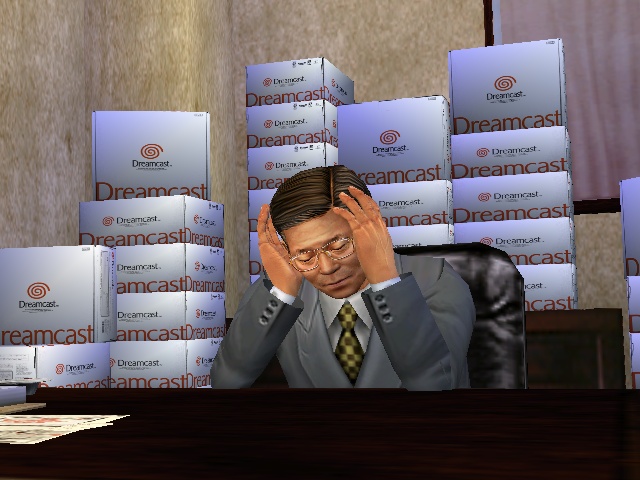
Playing up an executive managing director and joking about the state of the Dreamcast at the time, says a lot about Sega’s attitude at the time.
In Part 2 we covered Sega’s golden age, but great heights inevitably can bring great lows. Sega had lots of up and downs throughout their history. They also had great games, lots of them! But ultimately Sega did not make that much money from the Saturn. However, in the arcades they did absolute gangbusters. Sega needed to change their approach in regards to development and also their hardware. The solution was to make the Dreamcast and NAOMI arcade hardware the same and have all of the internal studios make games for it,in turn allowing them further grow and prosper. Twelve R&D studios in total were established, and the nine software studios were not split into arcade and console divisions – they made games for everything. Hisashi Suzuki and Yu Suzuki would manage the arcade business, with Hisashi putting in his final stretch at Sega before retirement.
We did a news post on how Phantasy Star Online 2 producer Satoshi Sakai if they where every going to do a game with a Dragon protagonist like Panzer Dragoon, according to Satoshi Sakai SEGA isn’t in the position to have a game like that sell. So we sat down and discussed if there was a market for a game like Panzer Dragoon and if SEGA of today could manage to make the game sell.